
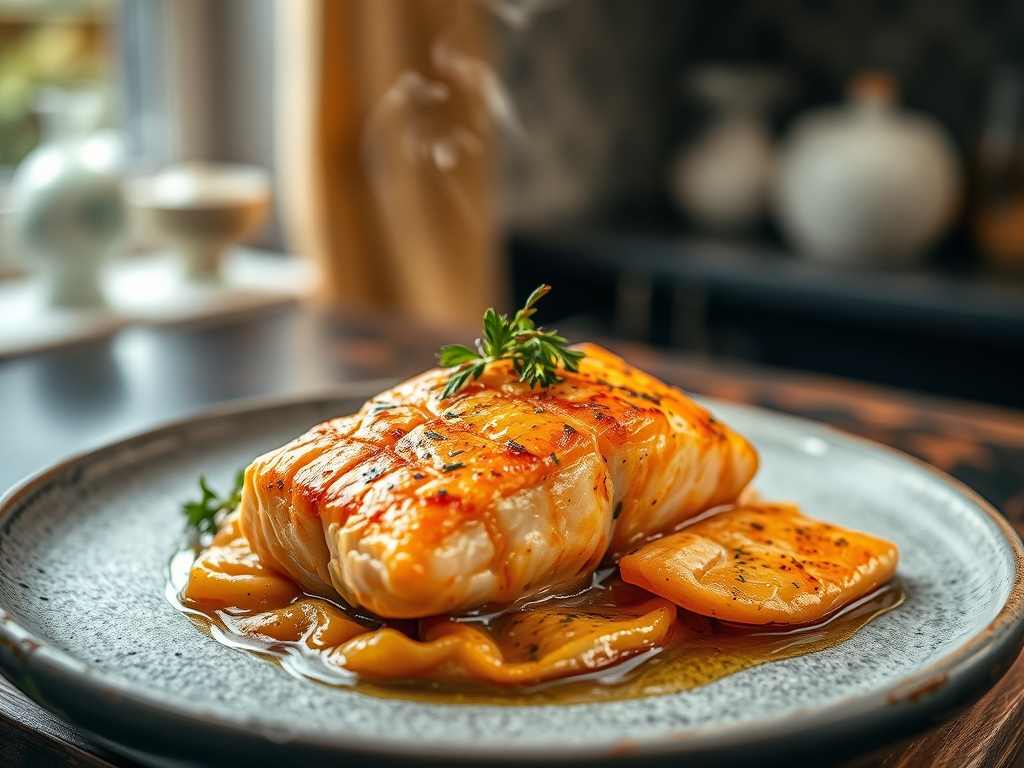
Imagine the sound of a heavy-bottomed skillet meeting a high-flame burner; that sharp, metallic ring is the opening bell for a culinary transformation. Most home cooks reach for a citrus wedge by reflex, but the most sophisticated salmon recipes without lemon rely on complex acids and deep umami profiles to cut through the fish's natural lipids. We are moving beyond the tart, one-note acidity of fruit to explore the world of fermented vinegars, piquant mustards, and aromatic fats.
The secret to a world-class salmon dish lies in the balance of pH and heat. When you remove lemon, you are forced to look at the chemistry of flavor differently. We are looking for ingredients that provide a high-frequency brightness without the watery dilution of juice. By focusing on concentrated glazes and dry-rubbed crusts, we can achieve a superior Maillard reaction. This ensures the skin remains shatteringly crisp while the interior stays succulent and buttery.
Whether you are dealing with a citrus allergy or simply bored of the status quo, these salmon recipes without lemon will redefine your weeknight rotation. We are going to harness the power of maple-miso emulsions, balsamic reductions, and spicy harissa pastes. Grab your apron and your favorite fish spatula; we are about to turn a simple fillet into a masterclass of texture and taste.
The Gathers:
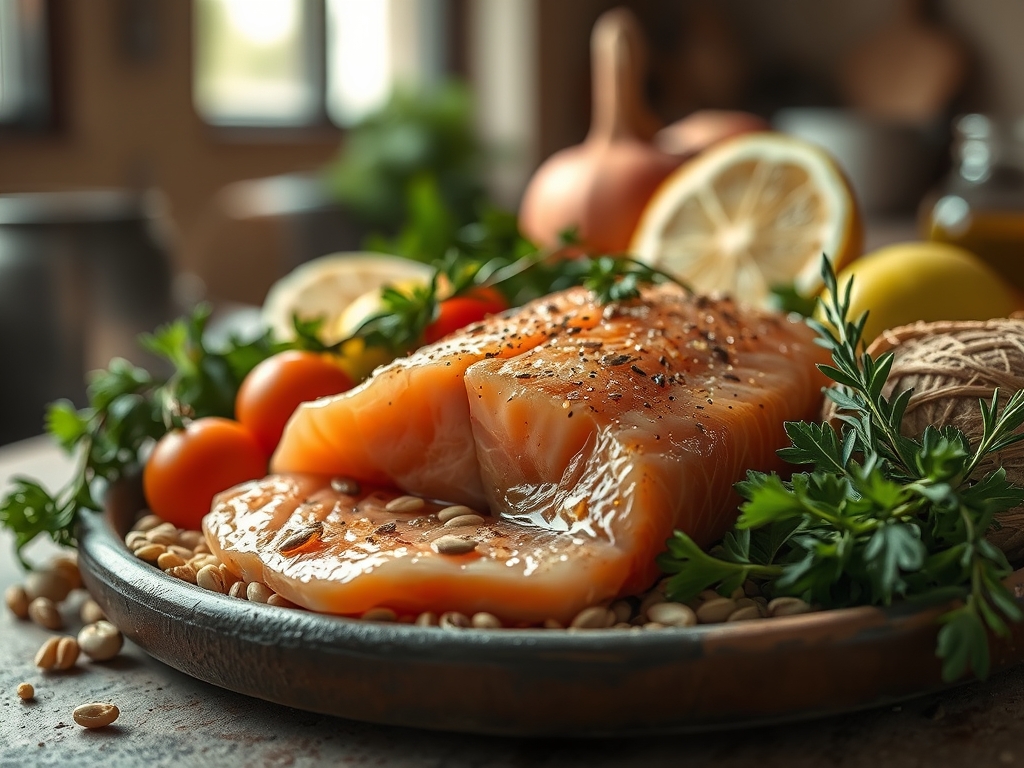
To execute these flavors, your mise-en-place must be precise. Start with high-quality Atlantic or Sockeye fillets, ensuring they are patted dry with lint-free towels to remove surface moisture. Moisture is the enemy of the sear. For our acid substitutes, gather unseasoned rice vinegar, white balsamic, and Dijon mustard. These provide the necessary piquant edge to balance the fish's fat.
For the aromatics, use a microplane to grate fresh ginger and garlic into a fine paste. This increases the surface area for flavor extraction. You will also need a high-smoke-point fat, such as ghee or avocado oil, to prevent the milk solids from burning during the searing process. If you want a "Smart Substitution" for lemon's brightness, look toward sumac; a deep red spice with a natural, tannic tartness; or preserved radish for a salty, acidic crunch.
Finally, keep your digital scale handy for measuring glaze components. A perfect 1:1 ratio of maple syrup to white miso creates a viscous coating that clings to the fish without sliding off into the pan. This preparation ensures that every ingredient serves a functional purpose in the final flavor architecture.
The Clock:
Efficiency in the kitchen is about "Chef's Flow," the art of overlapping tasks to minimize downtime. The prep phase for these salmon recipes without lemon takes exactly 10 minutes. This includes de-boning with fish tweezers and whisking your chosen glaze in a small saucier.
The cooking phase is a swift 8 to 12 minutes depending on the thickness of the fillet. You should spend the first 6 minutes focused entirely on the skin-side sear to render the subcutaneous fat. The final 2 to 4 minutes are for the "flip and glaze," where the ambient heat of the pan finishes the interior. Total time from fridge to table is under 25 minutes; a perfect window for maintaining the structural integrity of the proteins.
The Masterclass:
1. The Surface Preparation
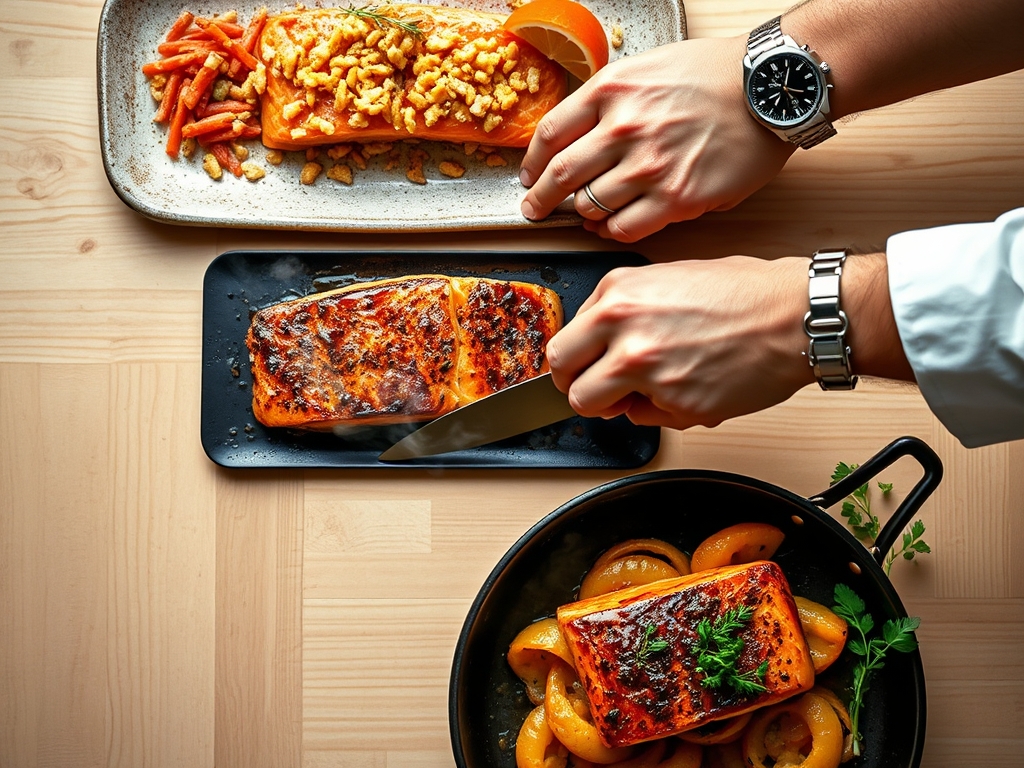
Lay your fillets on a clean cutting board and use a bench scraper to clear any excess scales. Season aggressively with kosher salt, which draws out moisture through osmosis, allowing for a better sear.
Pro Tip: This salt-induced dehydration creates a concentrated protein layer on the surface, which accelerates the Maillard reaction for a deeper brown crust.
2. Tempering the Protein
Allow the salmon to sit at room temperature for 15 minutes before it hits the pan. Cold fish causes the pan temperature to plummet, resulting in steaming rather than searing.
Pro Tip: Tempering prevents thermal shock, which causes the muscle fibers to contract violently and squeeze out the white albumin protein.
3. The High-Heat Sear
Heat your skillet until the oil shimmers. Place the salmon skin-side down using tongs, pressing firmly for 30 seconds to prevent the skin from curling.
Pro Tip: Maintaining physical contact between the skin and the hot metal ensures even conductive heat transfer, resulting in a uniform, glass-like crunch.
4. Deglazing and Glazing
Once the skin is crisp, flip the fish and immediately add your liquid aromatics or vinegar-based sauces to the pan. Use a spoon to baste the liquid over the top of the fillet.
Pro Tip: The liquid will deglaze the fond (browned bits) from the bottom of the pan, incorporating those concentrated flavors back into your sauce.
5. The Carryover Rest
Remove the salmon from the heat when it reaches an internal temperature of 125 degrees Fahrenheit. Transfer it to a warm plate and let it rest for 3 minutes.
Pro Tip: Thermal carryover will continue to cook the fish after it leaves the pan, bringing it to a perfect, flaky 130 to 135 degrees without drying it out.
The Deep Dive:
From a macro perspective, salmon is a nutritional powerhouse, offering roughly 20 grams of protein and 12 grams of healthy fats per 4-ounce serving. Because we are skipping the lemon, we are also avoiding the risk of citric acid breaking down the delicate omega-3 fatty acids prematurely.
For dietary swaps, Keto followers can replace maple syrup glazes with a reduction of heavy cream and cracked black pepper. Vegan friends can apply these same 10 flavoring techniques to firm tofu or "banana blossom" fillets. If you are Gluten-Free, simply ensure your miso paste is labeled GF, as some varieties use barley koji.
"The Fix-It" section: If your skin is sticking, you likely moved it too early; wait for the proteins to naturally release from the metal. If the fish is "bleeding" white gunk, your heat was too high; lower the flame next time. If the sauce is too thin, whisk in a cold pat of butter (a technique called monter au beurre) to create a glossy, thick emulsion.
For meal prep, reheating salmon is a science. Avoid the microwave, which vibrates water molecules and toughens the fish. Instead, use a low oven (275 degrees) with a splash of water covered in foil. This creates a gentle steam environment that restores "day-one" moisture levels.
The Wrap-Up:
Breaking the lemon habit is the fastest way to level up your culinary game. By understanding the chemistry of alternative acids and the physics of a perfect sear, you can create salmon recipes without lemon that are bold, sophisticated, and deeply satisfying. Remember, cooking is just delicious science. Go grab your tongs, trust your internal thermometer, and transform that fillet into something legendary!
The Kitchen Table:
Can I use vinegar instead of lemon for salmon?
Yes, white balsamic or rice vinegar are excellent substitutes. They provide the necessary acidity to balance the fat of the fish. Use a 1:1 ratio when replacing lemon juice in glazes to maintain the intended flavor balance and moisture levels.
What spices go well with salmon besides citrus?
Smoked paprika, cumin, mustard powder, and sumac are fantastic. Sumac specifically offers a tart, lemony profile without the liquid volume of citrus. Combine these with garlic powder and brown sugar for a crust that caramelizes beautifully under high heat.
How do I keep salmon moist without lemon juice?
Focus on fats and timing. Basting the fish in butter or olive oil creates a moisture barrier. Use a digital thermometer to pull the fish at 125 degrees Fahrenheit; this prevents the protein fibers from tightening and expelling their natural juices.
Is it okay to cook salmon with skin on?
Absolutely, the skin acts as an insulator, protecting the delicate flesh from direct heat. When seared properly in a heavy skillet, the skin becomes a delicious, crispy texture element that provides a structural base for heavy glazes or toppings.