
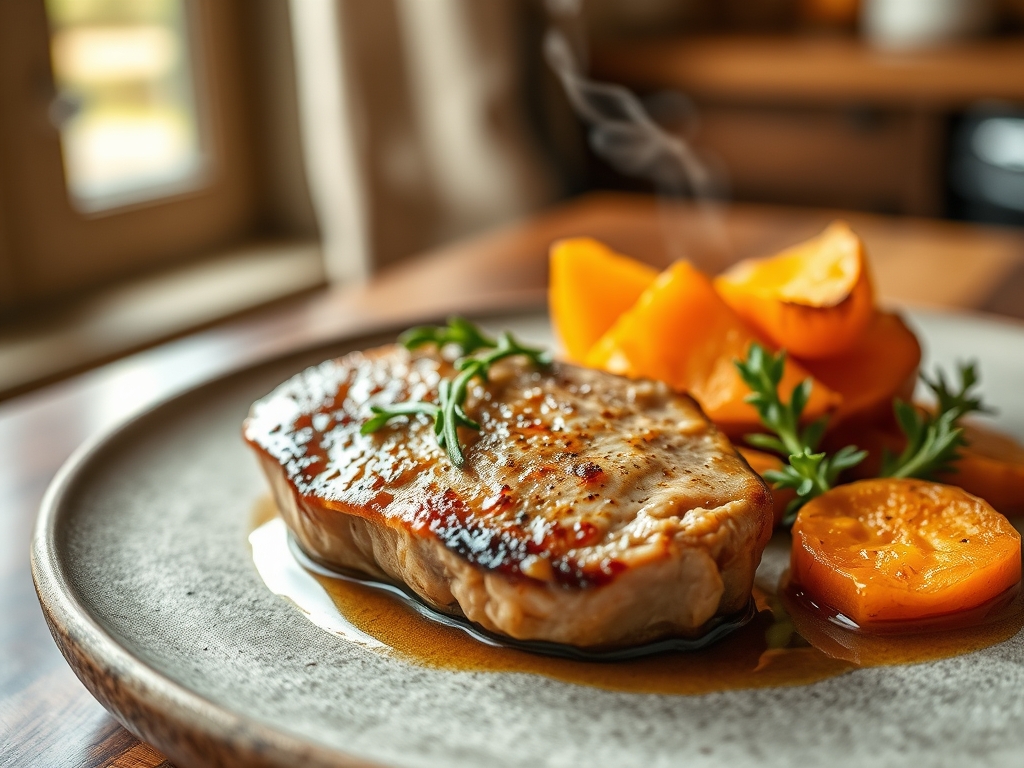
Picture the sound of a heavy-bottomed skillet meeting a high-flame burner; it is a sharp, metallic ring that promises a masterpiece. We are chasing the perfect marriage of salt and sugar today. When you master pork chop and sweet potato recipes, you are balancing the savory depth of porcine fats with the earthy, vanillic sweetness of a roasted tuber. It is a culinary duet that relies on precision heat and the magic of the Maillard reaction.
The scent of rendered fat mingling with caramelized starch is enough to make anyone weak in the knees. We are not just tossing things on a tray; we are engineering a meal that hits every sensory note from crunch to silk. Whether you are a weeknight warrior or a weekend host, these nine variations on the classic roast will elevate your kitchen game from "standard dinner" to "gastropub quality" in under an hour.
The Gathers:
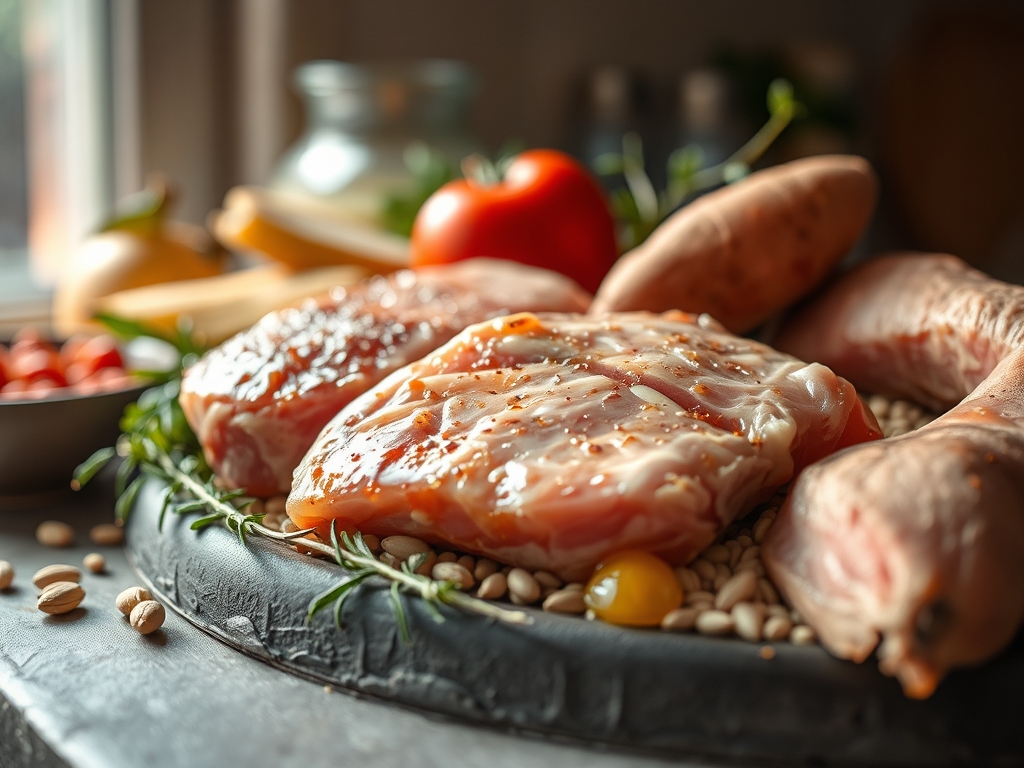
Before we ignite the range, we must assemble our mise-en-place with the precision of a chemist. Use a digital scale to ensure your pork chops are uniform in weight; ideally, look for bone-in center-cut chops that are at least 1.5 inches thick. This thickness provides a thermal buffer, preventing the interior from drying out before the exterior achieves a deep, mahogany crust. For the potatoes, look for Beauregard or Jewel varieties, which possess a high sugar content that facilitates rapid caramelization.
You will need a microplane for zesting citrus and grating fresh garlic into a fine paste, which allows the aromatics to infuse the oil without burning. Grab your tongs and a bench scraper to keep your workstation tidy. For the fats, a high-smoke-point oil like avocado oil is essential for the initial sear, while cold, unsalted butter will be used later to emulsify into a pan sauce.
Smart Substitutions:
If you are avoiding nightshades, swap the sweet potatoes for kabocha squash; it has a similar starch profile and viscous texture when roasted. For a leaner profile, pork tenderloin medallions can replace the chops, though you must reduce the roasting time by thirty percent to avoid protein denaturation. If you lack fresh herbs, use a ratio of one teaspoon dried to one tablespoon fresh, but ensure you bloom the dried herbs in hot fat to release their essential oils.
The Clock
Efficiency in the kitchen is about "Chef's Flow," the art of overlapping tasks so no heat is wasted. Prep time for these pork chop and sweet potato recipes sits at a crisp 15 minutes, while the active cook time spans 25 to 30 minutes.
The flow begins with the potatoes. Because they are dense and fibrous, they require a head start in the oven. While the tubers undergo enzymatic browning, you will be seasoning and searing the pork. This staggered start ensures that the meat rests while the potatoes finish their final crisping, allowing the muscle fibers to reabsorb juices for a succulent finish.
The Masterclass
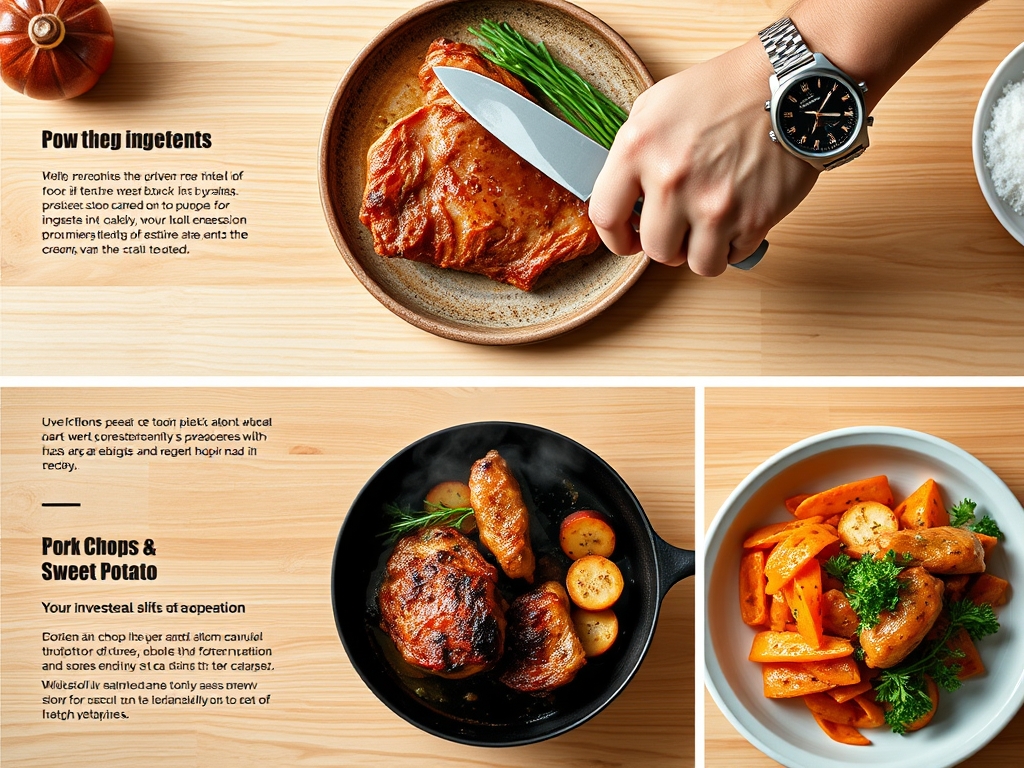
1. The Prep and Prime
Start by patting your pork chops bone-dry with paper towels. Moisture is the enemy of the sear; any surface water will turn to steam, preventing the Maillard reaction from occurring. Season aggressively with kosher salt and cracked black pepper from a height to ensure even distribution.
Pro Tip: This is called "dry brining." If you have time, salt the meat 40 minutes before cooking. This allows the salt to pull moisture out, dissolve into a brine, and then be reabsorbed into the meat, seasoning it to the core.
2. The Tuber Transformation
Peel and dice your sweet potatoes into uniform 1-inch cubes. Toss them in a bowl with oil, salt, and a pinch of smoked paprika. Spread them on a preheated sheet pan in a single layer. Crowding the pan causes the potatoes to steam rather than roast, resulting in a mushy texture.
Pro Tip: Preheating the sheet pan creates an immediate sear on the bottom of the potatoes. This conductive heat speeds up the breakdown of starches into maltose, enhancing the natural sweetness.
3. The High-Heat Sear
Heat your heavy-bottomed skillet until the oil shimmers. Lay the pork chops away from you to avoid oil splatter. Press down lightly with your tongs to ensure full surface contact. Sear for 3 to 4 minutes until a dark crust forms, then flip.
Pro Tip: Do not move the meat once it hits the pan. The protein needs uninterrupted contact with the heat to form a crust. If the meat sticks, the crust hasn't finished forming; it will release naturally when ready.
4. The Aromatic Infusion
Once you flip the chops, drop a knob of butter, two smashed garlic cloves, and a sprig of rosemary into the pan. As the butter foams, tilt the pan and use a large spoon to continuously drench the chops in the hot, flavored fat. This technique, known as arroser, adds incredible depth.
Pro Tip: Butter contains milk solids that caramelize at high temperatures. By basting, you are adding a layer of toasted, nutty flavor while keeping the top of the meat moist.
5. The Oven Finish
Transfer the skillet (if oven-safe) or the chops to the sheet pan with the potatoes. Roast at 400F until the internal temperature of the pork reaches 140F. Remove from the oven immediately.
Pro Tip: Thermal carryover is real. The internal temperature will rise another 5 degrees while the meat rests. Pulling it at 140F ensures a perfect, juicy 145F medium-rare to medium finish.
6. The Deglaze and Emulsify
While the meat rests, place the skillet back on the burner. Pour in a splash of apple cider or white wine to deglaze the pan, scraping up the fond (the brown bits). Whisk in a teaspoon of Dijon mustard for a piquant kick.
Pro Tip: The fond is concentrated flavor. Adding a cold liquid to a hot pan creates a rapid release of these compounds, which, when whisked with a fat, creates a stable, glossy emulsion.
The Deep Dive
From a nutritional standpoint, these pork chop and sweet potato recipes are a powerhouse. A standard 6-ounce serving of pork provides roughly 40 grams of high-quality protein and is rich in B-vitamins and selenium. The sweet potatoes provide a massive dose of Vitamin A and fiber, making this a low-glycemic meal that provides sustained energy.
Dietary Swaps:
For a Keto version, replace the sweet potatoes with roasted radishes or cauliflower florets. For a Vegan alternative, use thick-cut cauliflower steaks and baste with vegan butter or miso-glaze. To keep it Gluten-Free, ensure your mustard and any thickening agents are certified GF.
The Fix-It:
- Tough Pork: Usually caused by overcooking. Use a digital thermometer; never guess. If it is already dry, slice it thin against the grain and serve with extra pan sauce.
- Soggy Potatoes: Too much oil or a crowded pan. Return them to a high-heat oven (425F) for 5 minutes on the top rack to crisp the skins.
- Burnt Garlic: If your aromatics turn black, they become bitter. Remove them immediately and add fresh herbs to the resting juices to compensate.
Meal Prep Science:
When reheating, avoid the microwave, which rubberizes protein. Instead, use a low-heat oven (300F) with a splash of water covered in foil. This creates a gentle steam environment that rehydrates the meat without re-cooking it.
The Wrap-Up
Mastering the balance of a perfectly seared pork chop and a caramelized sweet potato is a foundational skill that will serve you for a lifetime. It is about understanding how heat moves through different densities and how salt interacts with moisture. Once you have the technique down, you can play with the flavors; add chili flakes for heat, or honey for a lacquered finish. Now, grab your skillet and get cooking!
The Kitchen Table
How do I prevent my pork chops from curling?
Score the thin layer of fat around the edge of the chop with a knife every inch. This prevents the fat from shrinking faster than the muscle, which causes the meat to buckle and curl during searing.
Can I use frozen sweet potatoes?
Yes, but do not thaw them first. Roast them directly from frozen at a higher temperature (425F) to ensure the exterior crisps before the interior becomes overly mushy from the ice crystals breaking down the cell walls.
What is the best way to tell if pork is done without a thermometer?
The "touch test" works: press the meat. If it feels like the fleshy part of your palm when your thumb touches your middle finger, it is medium. However, a digital thermometer is the only way to guarantee safety and juiciness.
Why are my roasted sweet potatoes gray or dull?
This is often due to oxidation or lack of acid. A tiny squeeze of lemon juice or a splash of vinegar after roasting brightens the color and balances the heavy starches with a necessary hit of acidity.