
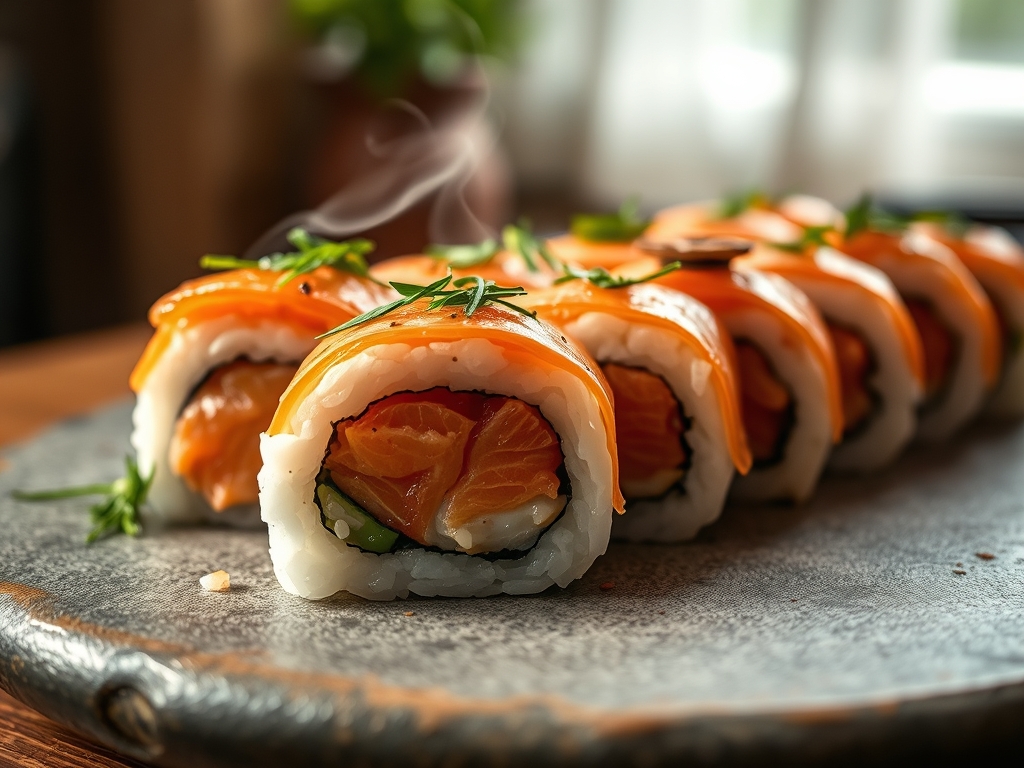
Close your eyes and imagine the perfect bite: a cool, buttery slice of Atlantic salmon yielding to the subtle tang of vinegared rice; followed by the sharp, piquant snap of fresh ginger. Mastering sushi rolls with salmon recipes is not just about rolling fish in seaweed; it is a high stakes game of moisture control and cellular structure. When you build these at home, you are acting as a culinary architect, balancing the lipids of the fish against the acidity of the seasoning. We are going to bypass the mushy rice and chewy nori of grocery store imitators. Instead, we are diving deep into the molecular magic that makes a professional grade maki roll sing. By the time we are done, you will understand the specific gravity of a perfect grain of rice and why the temperature of your hands actually matters. Get your bamboo mat ready, because we are about to transform your kitchen into a high end omakase station where science meets soul.
The Gathers:
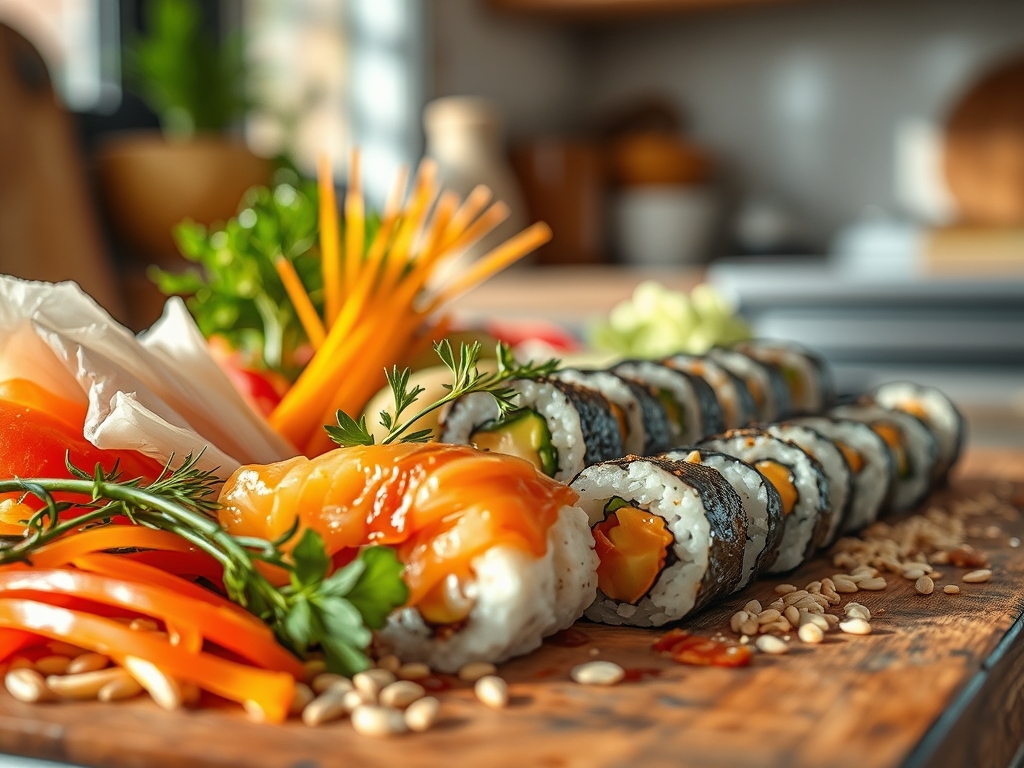
To execute these sushi rolls with salmon recipes, your mise en place must be precise. Start with sushi grade salmon, which has been flash frozen to -31 degrees Fahrenheit to eliminate parasites while preserving the delicate adipose tissue. You will need Koshihikari rice, a short grain cultivar prized for its high starch content and ability to remain distinct yet cohesive. For the seasoning, gather unseasoned rice vinegar, granulated sugar, and fine sea salt; this creates the "su" that seasons your grains.
Your toolkit is just as vital as your proteins. You will need a high carbon steel yanagiba or a very sharp chef knife to ensure clean, singular cuts that do not bruise the fish cells. A digital scale is non negotiable for measuring the water to rice ratio, as even a five gram deviation can lead to a gummy texture. Have a hangiri (a traditional wooden tub) or a wide glass bowl ready to cool the rice quickly, along with a microplane for zesting citrus or grating fresh wasabi.
Smart Substitutions: If you cannot find sushi grade raw salmon, use high quality smoked salmon or even confit salmon slow poached in olive oil. For a grain free alternative, riced cauliflower pulsed in a food processor works, provided you use a splash of rice vinegar and a pinch of xanthan gum to mimic the sticky, viscous nature of traditional starch.
The Clock: 1 Hour 15 Minutes
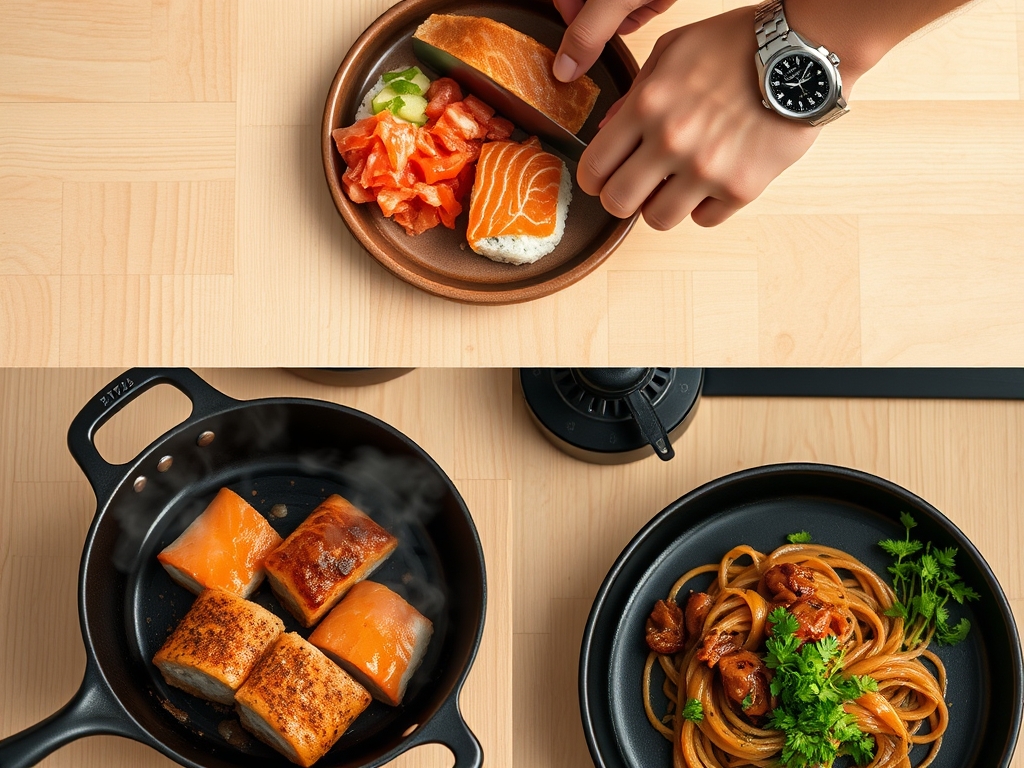
The "Chef's Flow" is all about managing thermal energy. You will spend 20 minutes on rice preparation, including the essential rinsing phase to remove excess surface starch. The actual cooking takes 15 minutes, followed by a 15 minute "steam rest" where the residual heat finishes the hydration of the grain core. While the rice cools (about 20 minutes), you will perform your knife work on the salmon and vegetables. The final assembly and rolling take a mere 10 minutes. Efficiency here prevents the nori from absorbing ambient humidity and becoming "rubbery."
The Masterclass:
1. The Starch Liberation
Rinse your rice in a fine mesh sieve until the water runs crystal clear. This removes the amylopectin dust that causes clumping. Cook with a 1:1.1 ratio of rice to water.
Pro Tip: This rinsing process prevents the "glue" effect. By removing surface starch, you allow the vinegar solution to penetrate the grain rather than just coating it, ensuring each bite is seasoned to the core.
2. The Acidic Infusion
While the rice is steaming hot, transfer it to your bowl and fold in the vinegar mixture using a bench scraper or rice paddle. Use a cutting motion to avoid mashing the grains.
Pro Tip: This is a lesson in evaporative cooling. As the vinegar evaporates, it pulls heat from the rice, creating a glossy sheen. This "seals" the grain, preventing it from becoming soggy when it touches the moist salmon.
3. Precision Protein Slicing
Pat your salmon dry with a lint free towel. Slice the fish against the grain into long, uniform batons about half an inch thick.
Pro Tip: Slicing against the grain breaks up the connective tissue (collagen). This ensures the fish melts on the tongue rather than requiring excessive chewing, a process known as mechanical tenderization.
4. The Nori Foundation
Place a sheet of nori, shiny side down, on your bamboo mat. Dampen your hands with tezu (vinegar water) to prevent the rice from sticking to your skin.
Pro Tip: Nori is hygroscopic, meaning it absorbs moisture from the air and the rice. Working quickly preserves the "snap" of the seaweed, which provides a necessary textural contrast to the soft filling.
5. The Structural Layering
Spread a thin, even layer of rice over the nori, leaving the top inch bare. Place your salmon, avocado, and cucumber strips in the center.
Pro Tip: Aligning the ingredients in the center creates a concentric seal. This ensures that when the roll is compressed, the fillings stay centralized and do not squeeze out the sides due to uneven pressure.
6. The Tension Roll
Lift the edge of the mat and tuck it over the filling, pulling back slightly to create tension. Continue rolling until you reach the bare nori strip.
Pro Tip: This is all about structural integrity. Applying firm, even pressure collapses the air pockets between the rice grains, allowing the roll to hold its shape during slicing without the need for "culinary glue."
7. The Final Slice
Wipe your knife with a damp cloth between every single cut. Slice the roll in half, then into six or eight even pieces.
Pro Tip: The moisture on the blade creates a hydroplaning effect. This reduces friction against the starch, ensuring the knife glides through the nori and fish without tearing the delicate fibers.
8. The Emulsified Drizzle
If using spicy mayo, whisk together kewpie mayo and sriracha until perfectly smooth. Drizzle over the top using a squeeze bottle for precision.
Pro Tip: Kewpie mayo uses only egg yolks, creating a more viscous emulsion than standard mayo. This higher fat content provides a luxurious mouthfeel that complements the omega 3 fatty acids in the salmon.
The Deep Dive:
Macro Nutrition: One standard salmon roll (8 pieces) typically contains 300 to 350 calories. You are looking at roughly 15g of protein, 40g of carbohydrates, and 8g of healthy fats. It is a powerhouse of Vitamin D and Omega-3s, which are essential for cognitive function.
Dietary Swaps:
- Vegan: Replace salmon with "tomato tuna" (marinated, skinned tomatoes) or smoked carrots.
- Keto: Use a "Naruto" style wrap, which involves using a vegetable peeler to create thin sheets of cucumber instead of rice and nori.
- Gluten Free: Ensure your soy sauce is replaced with Tamari and check that your rice vinegar is not grain based.
The Fix-It:
- Rice is too mushy: You likely over agitated the grains or used too much water. Fix it by spreading the rice thin on a baking sheet and placing it near a fan to pull out excess moisture.
- Nori won't seal: The "bare strip" is too dry. Dab a single grain of rice on the edge and smear it; the starch acts as a natural, edible adhesive.
- Roll is falling apart: You did not apply enough tension. Use your bamboo mat to "re-squeeze" the roll after it is already formed to compress the structure.
Meal Prep: Sushi is best eaten fresh, but if you must store it, wrap the roll tightly in plastic wrap before slicing. This prevents the rice from retrogradation, a process where starches crystallize and become hard in the fridge. To "revive" day old sushi, let it sit at room temperature for 15 minutes to soften the fats.
The Wrap-Up:
You have officially graduated from a sushi fan to a sushi scientist. By mastering the balance of pH in your rice and the physics of the tension roll, you have unlocked the ability to create restaurant quality sushi rolls with salmon recipes in your own kitchen. Remember that great cooking is 10 percent recipe and 90 percent technique. Keep your knives sharp, your rice seasoned, and your salmon cold. Now, go grab those chopsticks and enjoy the fruits of your labor!
The Kitchen Table:
Why is my sushi rice always so sticky?
Excess surface starch is usually the culprit. You must rinse the rice in cold water until the liquid runs completely clear. This ensures the grains stay distinct and do not turn into a gummy paste during the cooking process.
Can I use regular white rice for salmon rolls?
No, long grain rice lacks the necessary amylopectin levels to stick together. You specifically need short grain Japonica rice to ensure the roll holds its shape when sliced; otherwise, the contents will simply spill out.
Is it safe to eat raw salmon from the grocery store?
Only if it is explicitly labeled "sushi grade" or "sashimi grade." This indicates the fish has been frozen at specific temperatures to kill parasites. When in doubt, use high quality smoked salmon or fully cooked options.
How do I keep the rice from sticking to my hands?
Keep a bowl of "tezu" (a mixture of water and a splash of rice vinegar) nearby. Dipping your fingers into this solution creates a thin barrier that prevents the rice starch from bonding to your skin.