
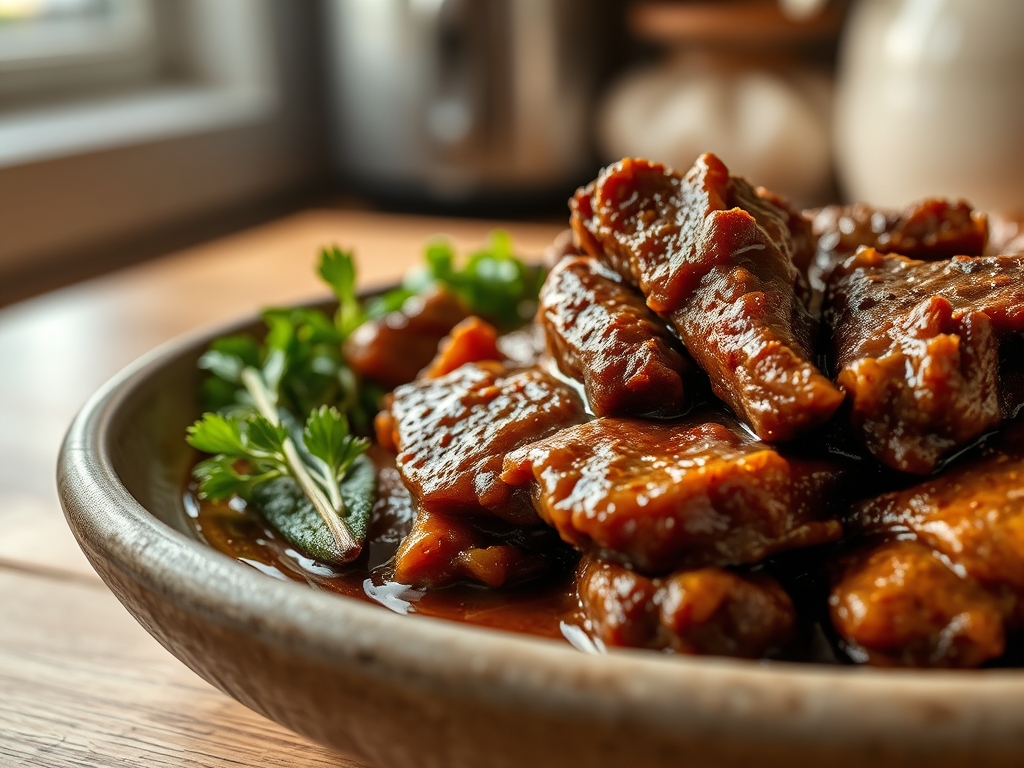
Picture this: a heavy-bottomed Dutch oven sits on your stovetop, its lid rattling slightly as a rhythmic, low-frequency bubble hums from within. The air in your kitchen has transformed into a thick, aromatic blanket of caramelized onions, toasted peppercorns, and the deep, savory bass note of rendering fat. If you are searching for the best braised beef recipes, you are not just looking for a meal; you are looking for the chemical magic that happens when tough collagen transforms into silk. Braising is the ultimate culinary alchemy. It takes the most humble, hardworking muscles of the animal and, through the application of low heat and moisture, turns them into something you can eat with a spoon. This is the art of the slow burn. It is about patience, precision, and understanding how a few hours of gentle simmering can create a sauce so viscous and rich it coats the back of a spoon like velvet. Grab your favorite apron and a glass of something bold; we are about to turn your kitchen into a high-end bistro.
The Gathers:
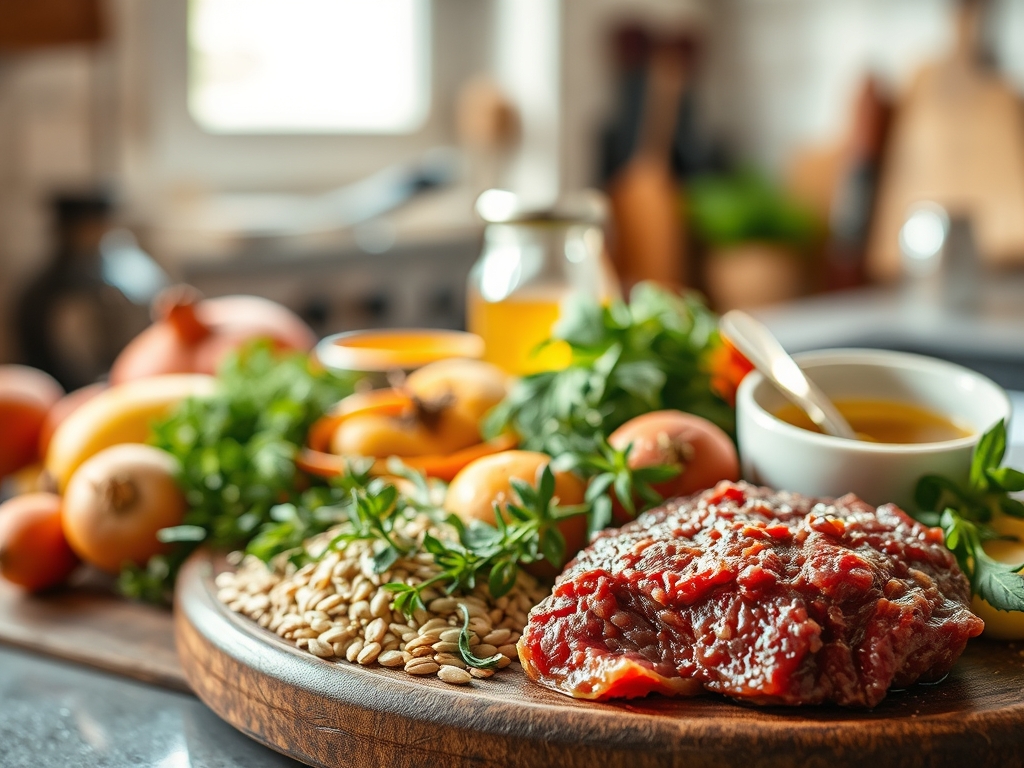
Before we ignite the burner, we must respect the mise-en-place. For the best braised beef recipes, you need cuts with high connective tissue. Look for Chuck Roast, Short Ribs, or Beef Shank. These cuts are riddled with intramuscular fat and silver skin, which will eventually break down into gelatin. You will also need a classic mirepoix: carrots, celery, and onions. Use a digital scale to ensure your ratios are precise; generally, two parts onion to one part each of carrot and celery.
For the liquid base, high-quality bone broth is non-negotiable. It provides the necessary protein structure for a glossy finish. You will also need a dry red wine, such as a Cabernet or Syrah, to provide acidity that cuts through the richness. Use a microplane to zest fresh garlic and ginger if you are leaning toward an Asian-inspired profile.
Smart Substitutions: If you are dodging alcohol, replace the wine with a mixture of beef stock and two tablespoons of pomegranate juice or balsamic vinegar. The acidity is vital for breaking down muscle fibers. If you cannot find short ribs, oxtail is a brilliant, high-collagen alternative that offers an even deeper level of gelatinous mouthfeel.
The Clock:
Mastering the "Chef's Flow" is about managing your passive time. While the beef spends three to four hours in the oven, your active work is finished in the first forty-five minutes.
Prep Time: 30 minutes. This includes trimming excess external fat (leave the internal marbling) and dicing your aromatics into uniform pieces with a sharp chef's knife.
Cook Time: 3.5 to 4 hours.
The Flow: Start by searing the meat. While it browns, chop your vegetables. Once the beef is removed and the vegetables are sweating, you can clean your station with a bench scraper. This ensures that by the time the pot goes into the oven, your kitchen is already spotless.
The Masterclass:
1. The Hard Sear
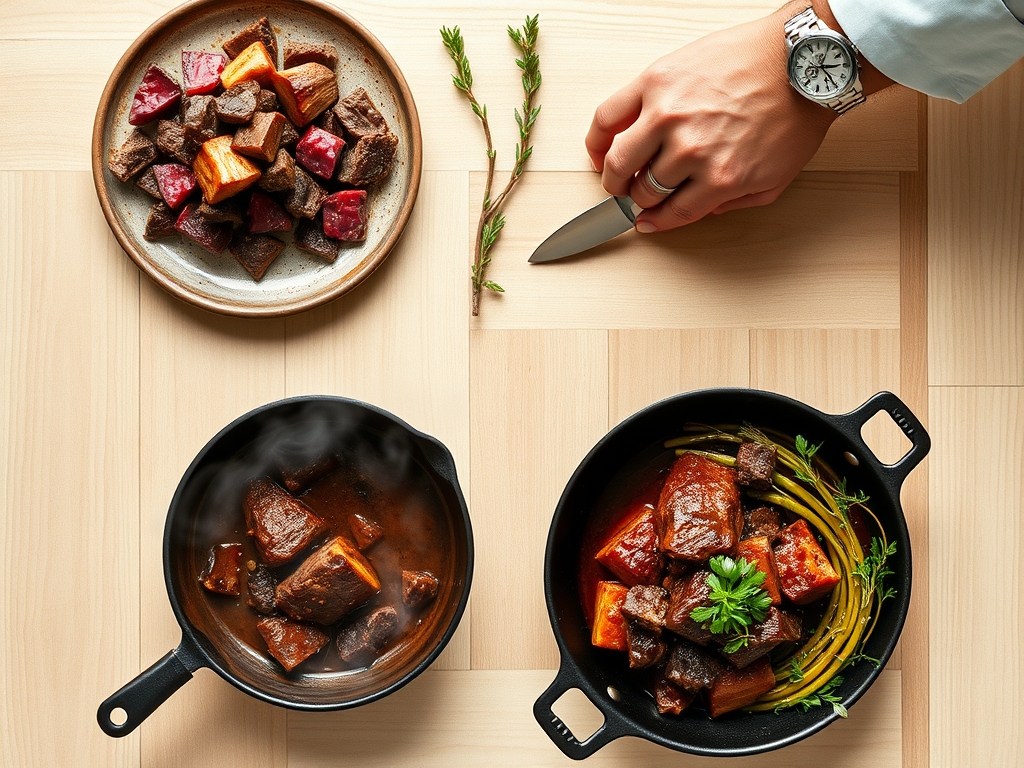
Pat your beef bone-dry with paper towels. Moisture is the enemy of the Maillard Reaction. Season aggressively with kosher salt and heat a thin layer of high-smoke-point oil in your skillet until it shimmers. Use tongs to press the meat into the pan, ensuring maximum surface contact.
Pro Tip: This step is about enzymatic browning. The Maillard Reaction occurs between amino acids and reducing sugars at temperatures above 285 degrees Fahrenheit. This creates hundreds of different flavor compounds that cannot be replicated by simmering alone.
2. Deglazing the Fond
Once the meat is browned and set aside, your pan will be covered in dark, caramelized bits called fond. Add your aromatics and cook until translucent, then pour in your wine. Use a wooden spoon to scrape every bit of that "brown gold" off the bottom.
Pro Tip: Deglazing is a chemical extraction process. The alcohol and acidity in the wine act as solvents, dissolving the flavor-packed proteins stuck to the pan and incorporating them into your braising liquid for a more complex profile.
3. The Low and Slow Submerge
Return the beef to the pot and add your stock until the meat is about two-thirds submerged. Do not drown it; you want the top of the meat to benefit from the humid air inside the pot. Add a bouquet garni of thyme, rosemary, and bay leaves.
Pro Tip: Maintaining a temperature between 180 and 200 degrees Fahrenheit is crucial. This is the "sweet spot" where collagen denaturation occurs. If the liquid boils too vigorously, the muscle fibers will tighten and become stringy rather than tender.
4. The Rest and Reduce
Once the meat is fork-tender, remove it carefully. Strain the liquid through a fine-mesh sieve into a saucier. Simmer the liquid over medium heat until it reduces by half, whisking in a knob of cold butter at the very end to create an emulsion.
Pro Tip: This is the "Gloss Factor." By reducing the liquid, you concentrate the gelatin and minerals. Adding cold butter (monter au beurre) creates a stable emulsion that gives the sauce a professional, piquant finish and a silky texture.
The Deep Dive:
Macro Nutrition: Braised beef is a powerhouse of protein and essential minerals like zinc and B12. A standard 6-ounce serving contains roughly 45g of protein and 28g of fat. To balance the macros, serve alongside complex carbohydrates like roasted root vegetables or polenta.
Dietary Swaps:
- Keto: Replace root vegetables with cauliflower mash and ensure your stock has no added sugars.
- Vegan: While this guide focuses on beef, you can apply these techniques to "Lion's Mane" mushrooms or thick-cut celery root for a similar umami experience.
- Gluten-Free: Braising is naturally GF, provided you do not use flour to thicken your sauce. Rely on reduction and gelatin instead.
The Fix-It:
- Tough Meat: If it is still chewy, it simply hasn't cooked long enough. Put the lid back on and give it another 45 minutes.
- Greasy Sauce: Use a fat separator or chill the sauce overnight. The fat will solidify on top, making it easy to remove.
- Bland Flavor: Add a teaspoon of fish sauce or soy sauce at the end. This boosts the umami without making the dish taste like seafood.
Meal Prep: Braised beef actually tastes better on day two. As it cools, the muscle fibers relax and reabsorb the flavorful cooking liquid. When reheating, do so gently on the stovetop with a splash of water to loosen the gelatin. Avoid the microwave, which can cause "warmed-over flavor" due to lipid oxidation.
The Wrap-Up:
There is a reason why braised dishes are the cornerstone of every great culinary tradition. They represent the intersection of science and soul. By mastering the sear, the deglaze, and the slow reduction, you have elevated a simple piece of protein into a masterpiece. Whether you are serving this over creamy mashed potatoes or tucked into a crusty baguette, you are now the master of the slow-cooker domain. Go forth and feed your favorite people!
The Kitchen Table:
What is the best cut for braised beef?
The best cuts are Chuck Roast or Short Ribs. These contain high amounts of collagen and intramuscular fat, which break down during the long cooking process to create a tender, succulent texture and a rich, flavorful sauce.
Why is my braised beef still tough?
If the beef is tough, it likely hasn't cooked long enough for the collagen to convert into gelatin. Continue simmering at a low temperature; the connective tissue needs time to dissolve completely before the meat becomes fork-tender.
Can I overcook beef in a braise?
Yes. While it is hard to do, eventually the muscle fibers will lose all structural integrity and become mushy or dry. Once the meat shreds easily with a fork, it is finished and should be removed from the heat.
Do I have to brown the meat first?
Technically no, but you should. Browning creates the Maillard Reaction, which develops deep, complex flavors and a rich color that simmering alone cannot achieve. It is the difference between a good dish and a professional-grade meal.