
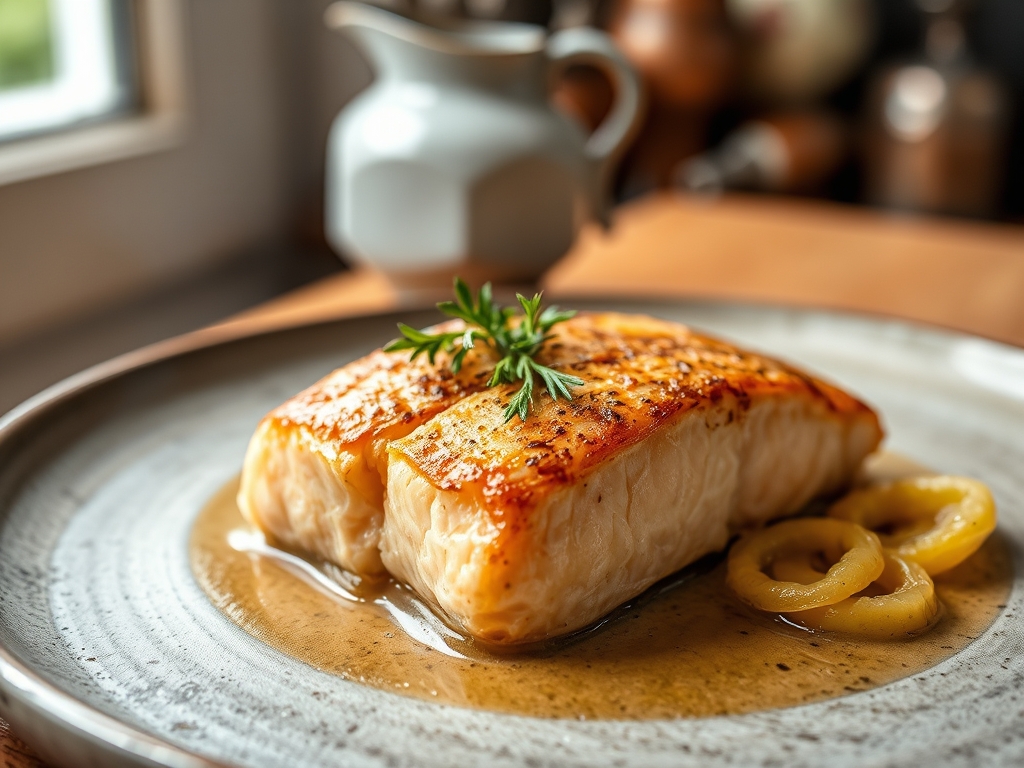
Imagine the sound of a cold, heavy-bottomed skillet meeting a high-fat salmon fillet. The hiss is immediate; it is the sound of moisture rapidly evaporating as the Maillard reaction begins to transform pale pink proteins into a golden, savory crust. When you master anti inflammatory salmon recipes, you are not just cooking; you are performing edible alchemy that soothes the body.
The secret lies in the delicate balance of Omega-3 fatty acids and the piquant heat of fresh aromatics. Salmon is the ultimate canvas for healing because its cellular structure is designed to hold onto moisture while absorbing the essence of ginger, turmeric, and garlic. We are moving beyond the boring, dry fillets of the past. Instead, we are focusing on textures that range from butter-soft poaching to the shatteringly crisp skin that provides a necessary textural counterpoint to a lush, vibrant sauce.
This guide is your roadmap to six distinct flavor profiles that fight oxidative stress without sacrificing a single ounce of culinary indulgence. Whether you are craving the bright acidity of a citrus-infused glaze or the earthy depth of a miso-rubbed roast, these techniques will ensure your kitchen smells like a high-end spa and your body feels like a well-oiled machine. Grab your favorite apron; it is time to turn the heat up on your health.
The Gathers:
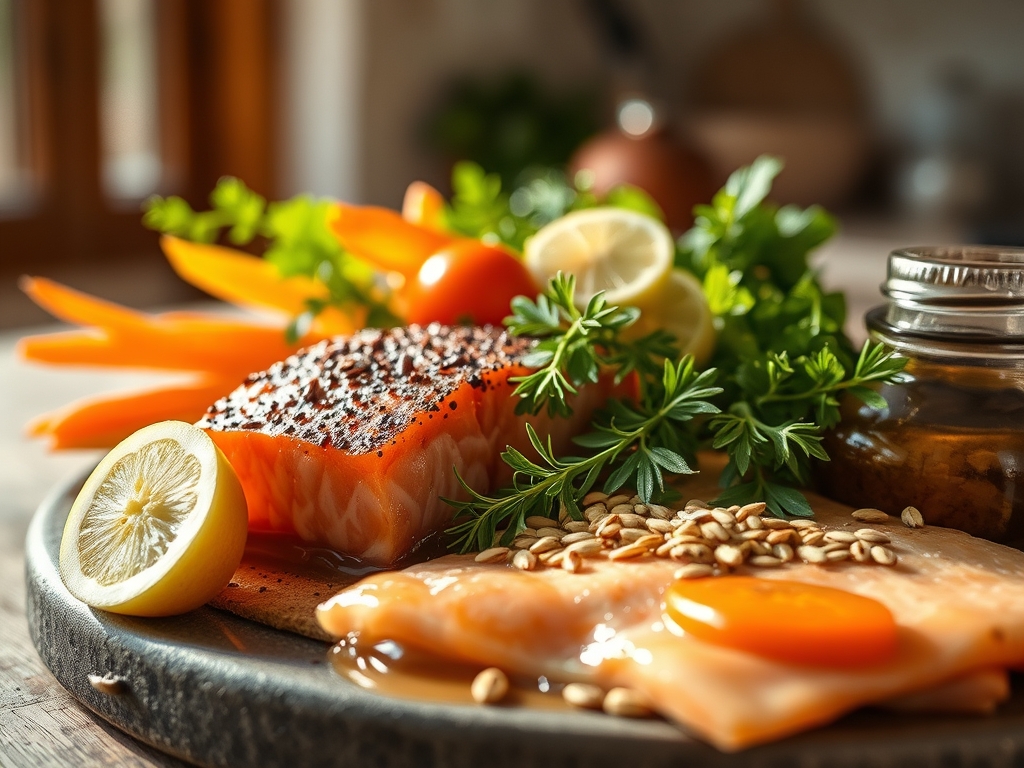
Before we touch the stove, we must respect the mise-en-place. Your workstation should be a shrine to bioavailability. You will need high-quality, wild-caught salmon fillets; look for deep coral hues which indicate high levels of astaxanthin, a potent antioxidant. Gather your aromatics: fresh turmeric root, knobs of ginger that snap with a crisp pop, and cloves of garlic that feel heavy for their size.
For the fats, reach for extra virgin olive oil or avocado oil. These are stable at higher temperatures and provide the viscous mouthfeel we crave. You will also need a bright acid to deglaze your pan; think organic apple cider vinegar or freshly squeezed Meyer lemons. To enhance the anti-inflammatory properties, we incorporate black pepper, which contains piperine to unlock the benefits of turmeric.
Smart Substitutions:
If you cannot find fresh turmeric, use a high-quality organic powder, but reduce the volume by half to avoid a chalky texture. For those avoiding nightshades, swap chili flakes for a generous grating of fresh horseradish via your microplane. If you are out of honey for your glazes, a splash of pure maple syrup provides the same sugar structure for caramelization while adding a hint of woodsy depth.
The Clock
Efficiency in the kitchen is about the "Chef's Flow." This is the art of overlapping tasks so that no second is wasted. For these anti inflammatory salmon recipes, expect a total commitment of 30 to 40 minutes from fridge to table. Prep work takes roughly 15 minutes; this includes the precision slicing of vegetables and the emulsification of your marinades.
The actual cook time is remarkably short, usually between 8 and 12 minutes depending on the thickness of the cut. The remaining time is dedicated to the "Rest Phase." Never skip this. Allowing the fish to rest for 5 minutes after it leaves the heat allows the muscle fibers to relax and reabsorb the juices, ensuring every bite is succulent rather than stringy.
The Masterclass
1. The Sear and Seal
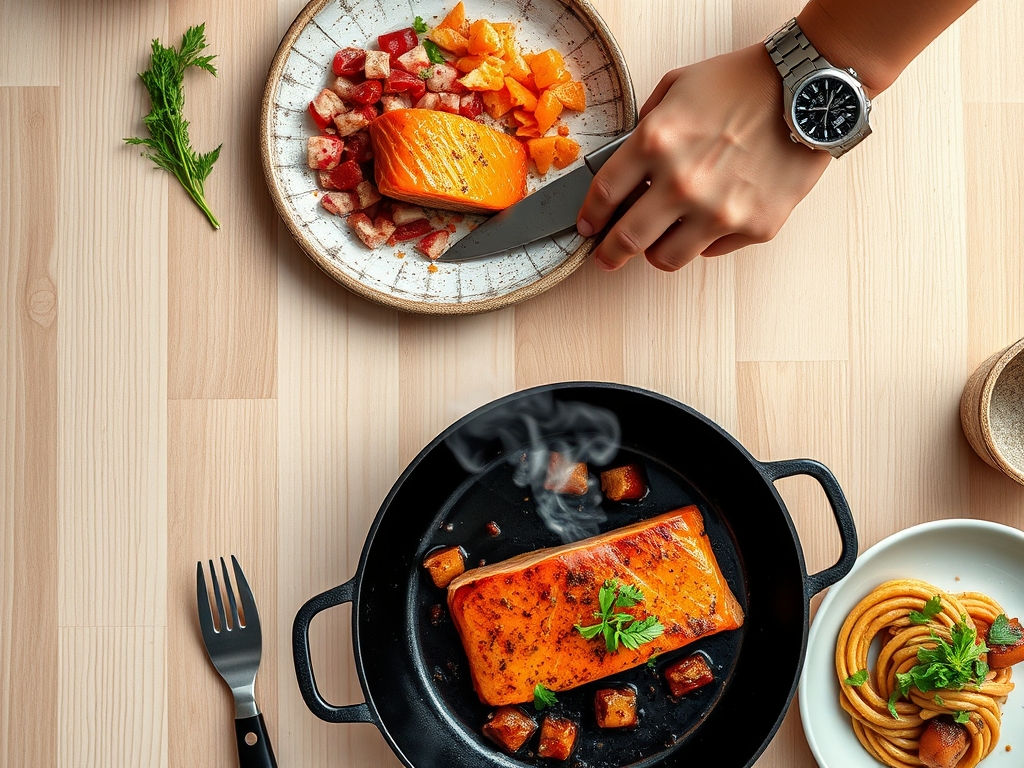
Place your heavy-bottomed skillet over medium-high heat. Pat the salmon bone-dry with a paper towel; moisture is the enemy of a crisp sear. Season aggressively with sea salt and cracked pepper. Once the oil shimmers, lay the fish skin-side down. Use your tongs to press the fillet firmly against the pan for the first 30 seconds to prevent the skin from curling.
Pro Tip: This technique utilizes thermal conduction. By pressing the fish down, you ensure maximum surface contact, which facilitates the Maillard reaction. This creates a complex flavor profile that boiled or steamed fish simply cannot achieve.
2. The Aromatic Infusion
Lower the heat slightly and add your "healing aromatics" to the pan. Toss in smashed garlic, sliced ginger, and a sprig of rosemary. Tilt the pan and use a large spoon to continuously baste the salmon with the hot, infused oil. This is called "arrosage."
Pro Tip: Basting creates a convection current of hot fat over the top of the fish. This gently cooks the upper layers without over-toughening the bottom, resulting in a perfectly even gradient of doneness.
3. The Deglaze and Emulsify
Remove the fish when it is about 10 degrees below your target internal temperature. While the pan is still hot, pour in a splash of bone broth or citrus juice. Use a wooden spoon or bench scraper to lift the "fond" (those delicious browned bits) from the bottom of the pan. Whisk in a teaspoon of cold ghee or olive oil to create a glossy, thick sauce.
Pro Tip: This step relies on emulsification. The acid in the juice breaks down the fats, while the gelatin in the broth (if using) acts as a stabilizer, creating a sauce that clings to the fish rather than running off the plate.
4. The Final Rest
Transfer the salmon to a warm plate and pour the pan sauce over it immediately. Cover loosely with foil. This is where the magic happens. The internal temperature will continue to rise via carryover cooking.
Pro Tip: Thermal carryover can increase the internal temperature by 5 to 7 degrees. If you cook the fish to "perfect" in the pan, it will be overdone by the time it reaches your mouth. Always pull it early.
The Deep Dive
When we look at the macro nutrition of these anti inflammatory salmon recipes, we are seeing a powerhouse of health. A standard 6-ounce serving provides roughly 34 grams of high-quality protein and 13 grams of healthy fats, with nearly zero impact on blood sugar. This makes it a gold standard for metabolic health.
Dietary Swaps:
- Keto: Replace any honey or maple syrup in glazes with a drop of liquid stevia or simply omit the sweetener entirely; the caramelization of the garlic will provide enough perceived sweetness.
- Vegan: While this guide focuses on salmon, you can apply these exact aromatic infusions to thick slabs of "Lion's Mane" mushrooms or extra-firm tofu for a similar anti-inflammatory effect.
- Gluten-Free: Always ensure your tamari or coconut aminos are certified GF to keep the inflammatory markers low.
The Fix-It:
- The Skin is Soggy: You likely moved the fish too early. Wait for the proteins to naturally release from the pan surface. If it sticks, it is not ready.
- White Gunk Appearing: This is albumin, a protein that pushes out when the fish is cooked too fast or too long. Lower your heat and pull the fish sooner next time.
- The Sauce Broke: If your sauce looks oily and separated, whisk in a teaspoon of warm water very quickly. This re-establishes the emulsion.
Meal Prep Science:
To reheat salmon without it smelling "fishy" or turning into rubber, avoid the microwave. The microwave agitates water molecules too violently, which ruptures the delicate fat cells. Instead, place the salmon in a covered dish with a tablespoon of water and heat in a 275-degree oven for 10 minutes. This creates a gentle steam chamber that preserves the "day-one" moisture levels.
The Wrap-Up
Cooking for your health should never feel like a chore; it should feel like a celebration of what your body can do when fueled correctly. By mastering these six anti inflammatory salmon recipes, you are taking control of your internal environment. You are choosing vibrant flavors, scientific precision, and deep nourishment. Remember, the best ingredient you can add to any dish is your own intuition. Listen to the sizzle, watch the color change, and enjoy every restorative bite. Your future self is already thanking you.
The Kitchen Table
Which salmon is best for reducing inflammation?
Wild-caught Sockeye or King salmon are superior choices. They contain higher concentrations of Omega-3 fatty acids and astaxanthin compared to farmed varieties, which are essential for neutralizing pro-inflammatory cytokines in the body.
How do I prevent salmon from sticking to the pan?
Ensure the fillet is bone-dry and the oil is shimmering hot before contact. Use a heavy-bottomed stainless steel or cast iron skillet. Once the salmon hits the pan, do not move it until the skin naturally releases.
Can I eat salmon skin on an anti-inflammatory diet?
Yes, the skin contains a high concentration of Omega-3s. However, ensure it is crispy. Soggy skin is unpalatable and lacks the textural benefits that make the meal satisfying, which helps prevent overeating later.
What is the healthiest way to cook salmon?
Low-temperature roasting or gentle pan-searing with anti-inflammatory fats like avocado oil are ideal. These methods preserve the delicate fatty acids and prevent the formation of harmful advanced glycation end products (AGEs) found in charred foods.