
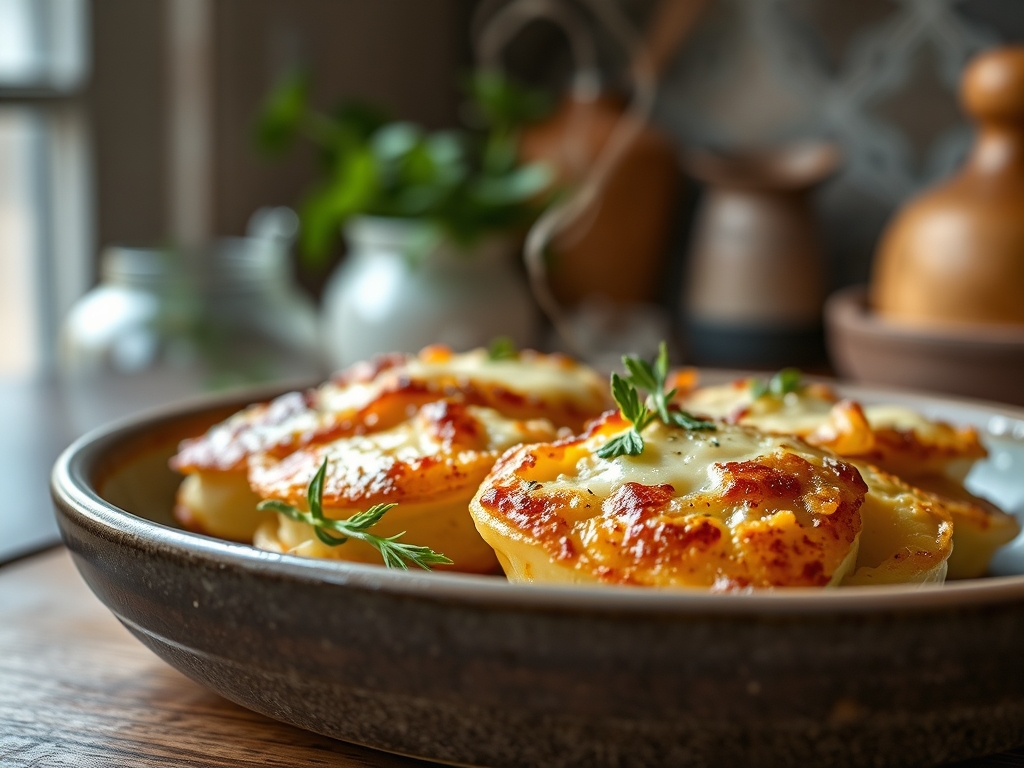
Imagine the scent of bubbling heavy cream and toasted Gruyere wafting through your kitchen on a cold Tuesday night. It is the ultimate culinary hug. When you are hunting for the best scalloped potato recipes with cheese, you are not just looking for dinner; you are looking for a masterpiece of starch and silk.
The secret to a truly transformative potato dish lies in the intersection of chemistry and comfort. We are moving beyond the watery, bland casseroles of the past. Today, we are engineering a dish that balances the earthy sweetness of a Yukon Gold with the sharp, piquant bite of an aged cheddar. This is about achieving that perfect, glass-like crust on top while maintaining a tender, velvety interior that holds its shape on the plate. Grab your favorite apron and a glass of wine; we are about to turn a humble root vegetable into a five-star experience that will have your guests scraping the bottom of the ceramic baker.
The Gathers:
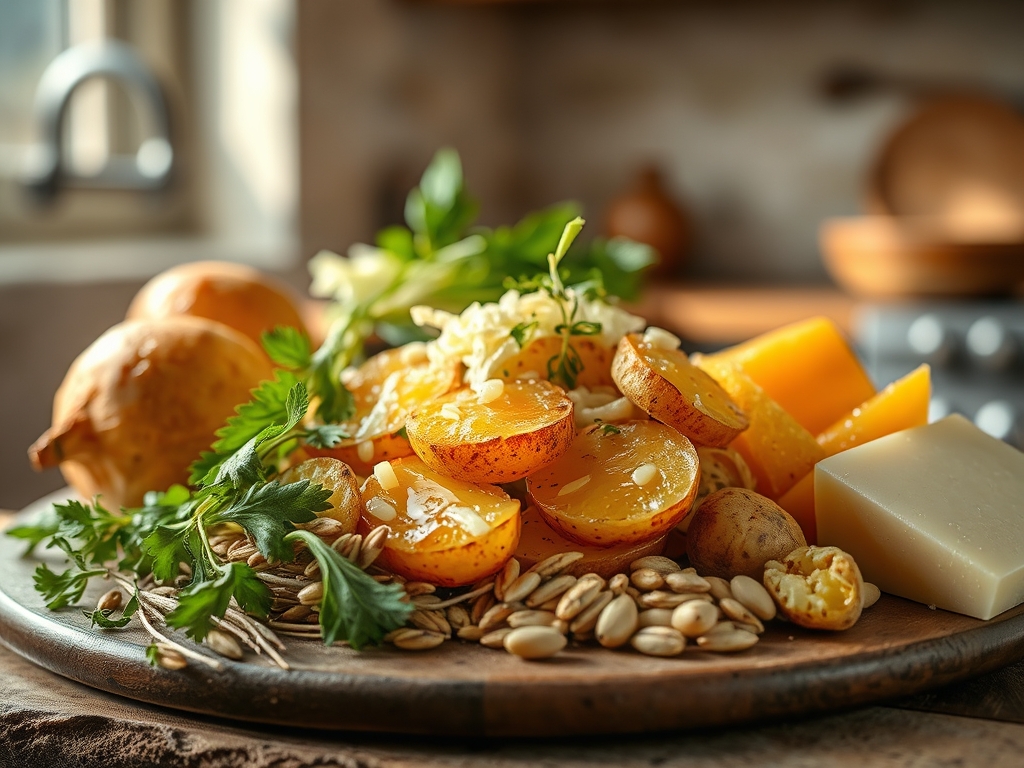
To begin our journey, we must assemble a mise-en-place that respects the integrity of our ingredients. Start with four pounds of high-starch potatoes. I prefer Yukon Golds for their buttery yellow hue and medium-starch content; they hold their structural integrity better than a Russet during the long braise. You will also need two cups of heavy cream, one cup of whole milk, and a curated selection of cheeses. For a complex flavor profile, mix a sharp white cheddar for acidity with a nutty Emmental for stretch.
Use a digital scale to measure your butter and flour for the roux; precision prevents a greasy mouthfeel. Your aromatics should include fresh thyme, three cloves of garlic smashed into a paste, and a pinch of freshly grated nutmeg. Nutmeg contains volatile oils that enhance the dairy notes without making the dish taste like dessert.
Smart Substitutions:
If you find yourself short on heavy cream, a mixture of whole milk and a tablespoon of cornstarch can mimic the viscous texture, though you will lose some richness. For a lighter profile, swap half of the potatoes for thinly sliced parsnips or celery root. This adds a sophisticated, earthy depth while cutting the overall glycemic load. If you are out of fresh garlic, a teaspoon of high-quality garlic oil can infuse the sauce with that essential pungency without the risk of burnt bits.
The Clock
Efficiency in the kitchen is all about the "Chef's Flow." Expect a total commitment of 90 minutes. You will spend 20 minutes on prep, which involves the rhythmic slicing of tubers and the gentle whisking of your bechamel. The remaining 70 minutes belong to the oven.
The first 45 minutes of baking are done under a tight seal of foil to trap steam, which softens the starch granules. The final 25 minutes are uncovered, allowing the Maillard reaction to take place, creating that golden, savory crust. Let the dish rest for at least 15 minutes before serving. This allows the internal temperature to stabilize and the sauce to set, ensuring your layers do not slide into a puddle when sliced.
The Masterclass
1. Precision Slicing with a Mandoline
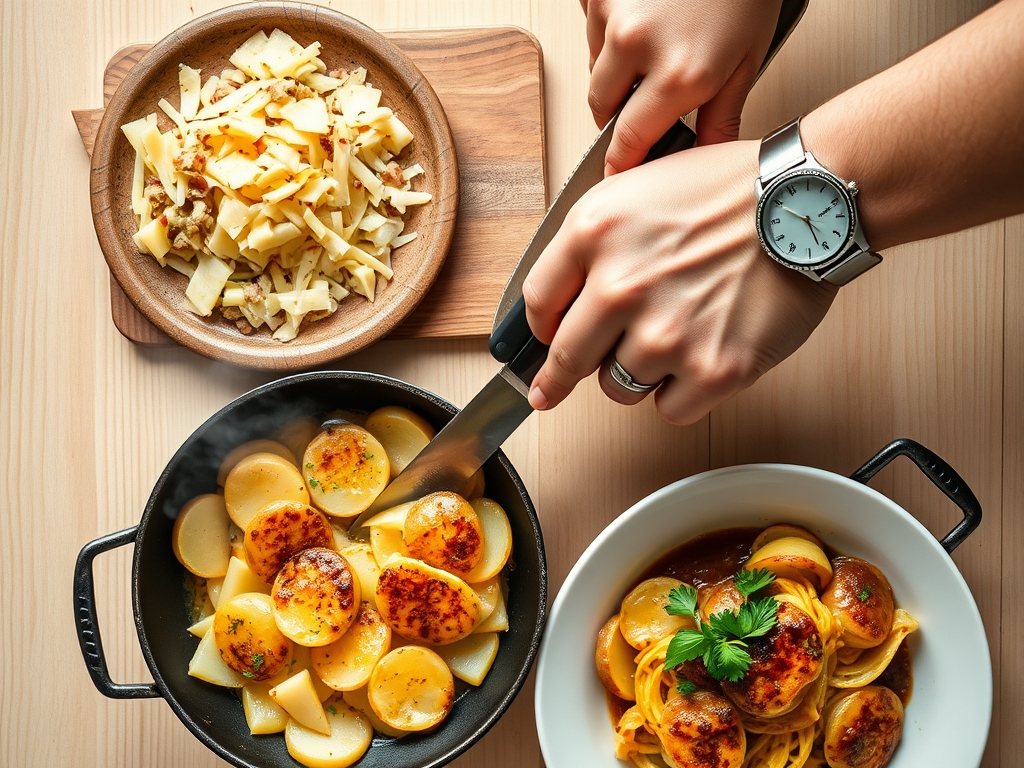
Uniformity is the soul of this dish. Use a mandoline or a very sharp chef's knife to slice your potatoes into 1/8-inch rounds. If the slices are uneven, some will turn to mush while others remain crunchy.
Pro Tip: Do not soak your potato slices in water after cutting. You need the surface starch to act as a natural thickener for the sauce, creating a cohesive, creamy bond between layers.
2. Infusing the Liquid Gold
In a saucier, combine your cream, milk, garlic, and thyme. Bring it to a bare simmer over medium-low heat. You are looking to infuse the dairy with the aromatics without scorching the proteins.
Pro Tip: Heat the dairy before adding it to the potatoes. This jumpstarts the cooking process and prevents the potatoes from oxidizing and turning an unappealing gray color.
3. Building the Roux Base
Melt four tablespoons of unsalted butter in a heavy-bottomed skillet. Whisk in an equal amount of flour and cook for two minutes to remove the raw flour taste. Slowly stream in your infused cream while whisking constantly to create a smooth, velvety sauce.
Pro Tip: This is a classic Bechamel. Adding the liquid slowly prevents clumping by allowing the flour particles to hydrate evenly, ensuring a silky finish.
4. The Cheese Integration
Remove the sauce from the heat and whisk in two-thirds of your grated cheese using a microplane for the finest melt. Stir until the cheese is fully incorporated and the sauce is glossy.
Pro Tip: Adding cheese to a boiling liquid can cause it to "break" or become grainy. Lowering the temperature ensures the fats and proteins emulsify smoothly into the sauce.
5. Architectural Layering
Grease a 9×13 ceramic baking dish. Arrange a third of the potatoes in an overlapping pattern, season lightly with salt and pepper, and pour over a third of the sauce. Repeat until all ingredients are used.
Pro Tip: Overlapping the slices like shingles creates structural integrity. This allows heat to circulate through the gaps while the flat surfaces provide maximum contact for the sauce.
6. The Initial Steam Phase
Cover the dish tightly with aluminum foil. Place it on a baking sheet to catch any potential bubbles. Bake at 375 degrees Fahrenheit for 45 minutes.
Pro Tip: The foil creates a pressurized environment that cooks the potatoes through conductive heat. This ensures the centers are tender before the exterior becomes too dark.
7. The Final Browning
Remove the foil and sprinkle the remaining cheese over the top. Increase the oven temperature to 400 degrees and bake for another 20 to 25 minutes until the top is a deep, burnished gold.
Pro Tip: This stage utilizes thermal carryover. The dish will continue to cook for several minutes after being removed from the oven, so pull it out when the center still has a slight wobble.
The Deep Dive
From a macro perspective, this dish is a powerhouse of carbohydrates and fats, making it a perfect side for lean proteins like roasted chicken or steamed asparagus. One serving typically contains 350 calories, 22 grams of fat, and 30 grams of carbohydrates.
Dietary Swaps:
For a Vegan version, use full-fat coconut milk and nutritional yeast for a cheesy umami hit. Keto enthusiasts can swap potatoes for sliced cauliflower or daikon radish. For a Gluten-Free masterpiece, use a 1:1 GF flour blend or thicken your sauce by reducing the heavy cream by half.
The Fix-It:
If your sauce is too thin, the potatoes likely released too much moisture; next time, use a higher-starch potato. If the cheese is oily, the oven was too hot, causing the fats to separate. If the potatoes are still hard, you likely sliced them too thick; increase the covered baking time by 15 minutes.
Meal Prep:
To reheat, add a splash of milk to the dish and cover it with foil. Heat at 325 degrees until bubbly. This introduces moisture back into the starch molecules, preventing the "day-two" dryness often associated with leftovers.
The Wrap-Up
Mastering the best scalloped potato recipes with cheese is a rite of passage for any home cook. It is a dish that demands patience and a little bit of science, but the reward is a symphony of textures and flavors. Whether you are hosting a holiday dinner or just treating yourself on a rainy evening, these potatoes are guaranteed to be the star of the show. Now, go forth, grab your bench scraper, and start slicing!
The Kitchen Table
Can I make these potatoes ahead of time?
Yes. Assemble the dish, bake it covered for 45 minutes, then cool and refrigerate. When ready to serve, add the final cheese layer and finish the uncovered bake. This ensures a fresh, bubbly crust every time.
What is the best cheese for scalloped potatoes?
A mix of Gruyere and Sharp Cheddar is ideal. Gruyere provides a superior melt and nutty profile, while Sharp Cheddar adds the necessary acidity and bite to cut through the heavy cream.
Why did my sauce turn out curdled?
Curdling usually happens if the heat is too high or if you used low-fat milk. High heat causes the proteins in dairy to clump. Always use whole milk or cream and keep the simmer gentle.
Do I need to peel the potatoes?
For Yukon Golds, the skin is thin enough to leave on for a rustic look. However, for the classic, elegant scalloped texture, peeling is recommended to ensure every bite is perfectly uniform and soft.