
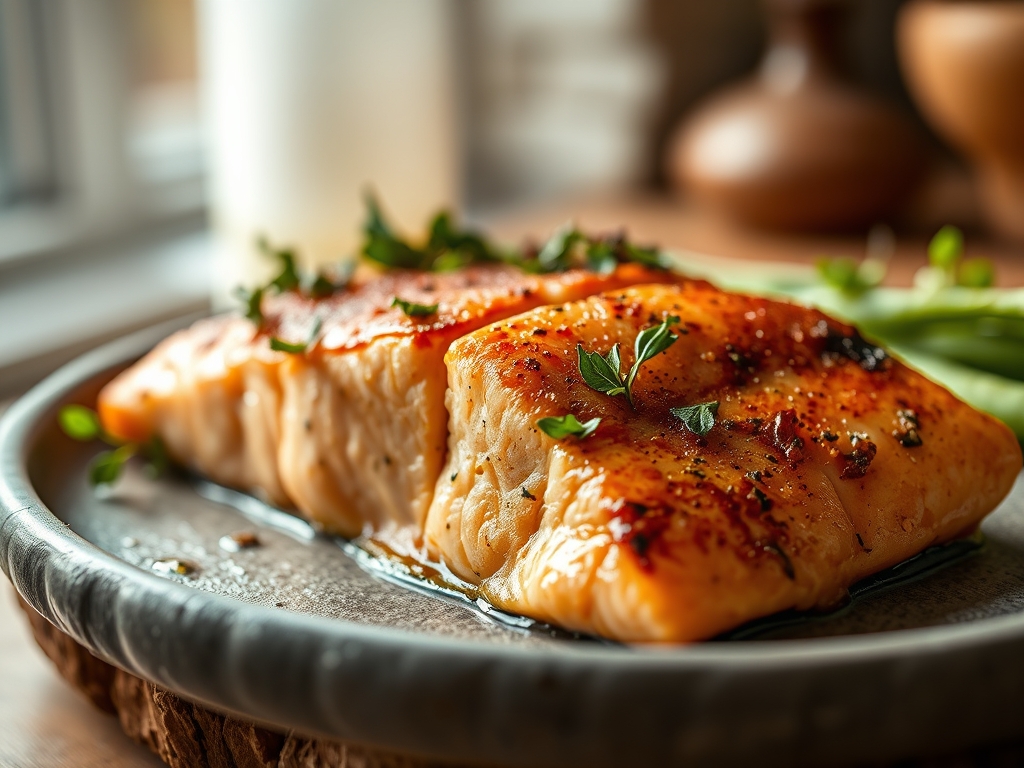
Imagine the scent of cold Pacific salt spray hitting a sizzling heavy-bottomed skillet. That is the initial rush of working with the "Chinook," a fish so marbled with intramuscular fat that it behaves more like Wagyu beef than seafood. When you hunt for the best king salmon recipes, you are looking for methods that respect that high oil content. We are not just cooking dinner; we are managing a delicate lipid structure that melts at room temperature. The texture is buttery, the flavor is deeply savory, and the margin for error is slim because of its sheer richness. To master this fish, you must understand how to balance its decadence with acidity and heat. We are going to transform a raw, iridescent fillet into a crusty, medium-rare masterpiece that flakes under the slightest pressure from a fork. Put on your apron and grab your favorite chef's knife. We are diving into the molecular magic of the ocean's most prestigious protein to ensure your kitchen smells like a Michelin-starred bistro tonight.
The Gathers:
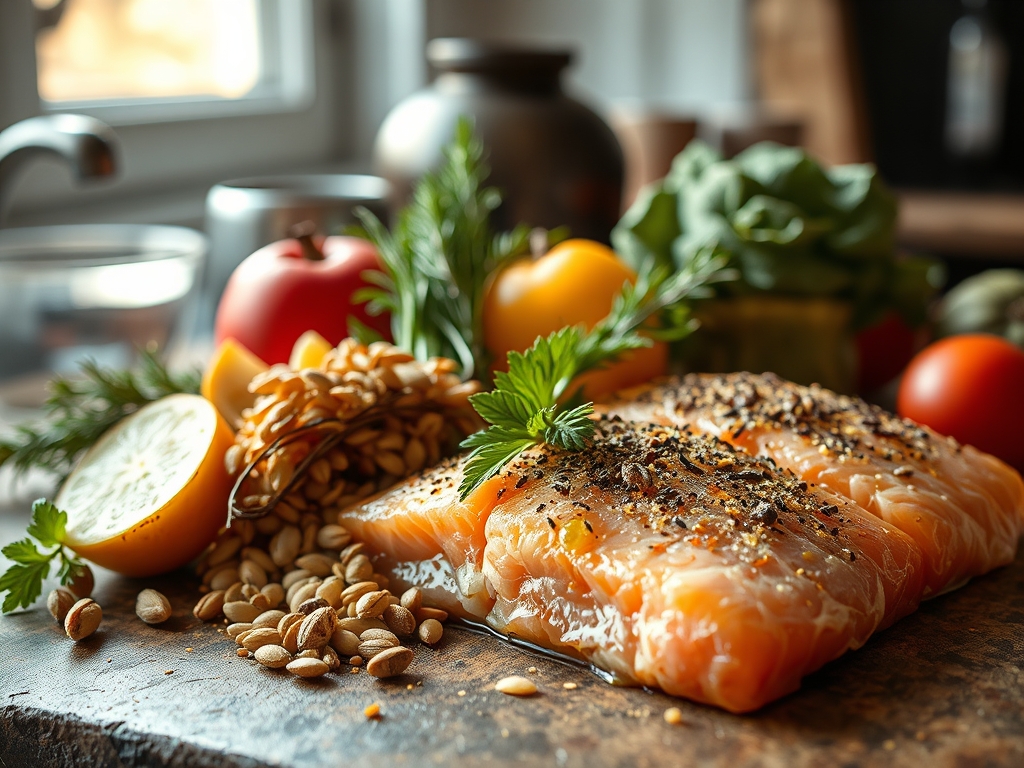
To execute these best king salmon recipes, your mise-en-place must be precise. Start with a center-cut King Salmon fillet, ideally three pounds for a full dinner party. You will need high-smoke-point fats like avocado oil or clarified butter (ghee) to achieve a proper sear without scorching the proteins. For the aromatics, gather fresh dill, flat-leaf parsley, and a head of garlic. The science of flavor requires a piquant counterpoint to the salmon's fat; have a bottle of dry white wine for deglazing and a bowl of lemons ready for zest.
Your tool kit is just as vital as your ingredients. You will need a microplane for ultra-fine citrus zest, a digital scale to ensure even portioning, and a fish spatula (slotted and flexible) to flip the delicate fillets without tearing the skin.
Smart Substitutions:
If King Salmon is unavailable, Steelhead Trout is your best biological match due to its similar fat profile. If you are avoiding dairy, swap the butter in any sauce for a high-quality cashew cream to maintain a viscous mouthfeel. For a soy-free umami boost, use coconut aminos in your glazes instead of traditional shoyu.
The Clock
Efficiency in the kitchen is about "Chef's Flow," which is the art of overlapping tasks to minimize downtime. Total preparation for these recipes takes approximately 20 minutes of active knife work and 15 to 25 minutes of thermal application.
The flow begins with the "Chill Temper." Remove your salmon from the refrigerator 20 minutes before cooking. This allows the internal temperature to rise slightly, ensuring the center is not ice-cold when the exterior is perfectly seared. While the fish tempers, use your bench scraper to organize your chopped aromatics. The goal is to have every sauce component measured before the fish touches the pan. Because King Salmon has such high fat content, it retains heat longer than leaner fish; always factor in a 5-minute rest period to allow for thermal carryover.
The Masterclass
1. The Desiccation Phase
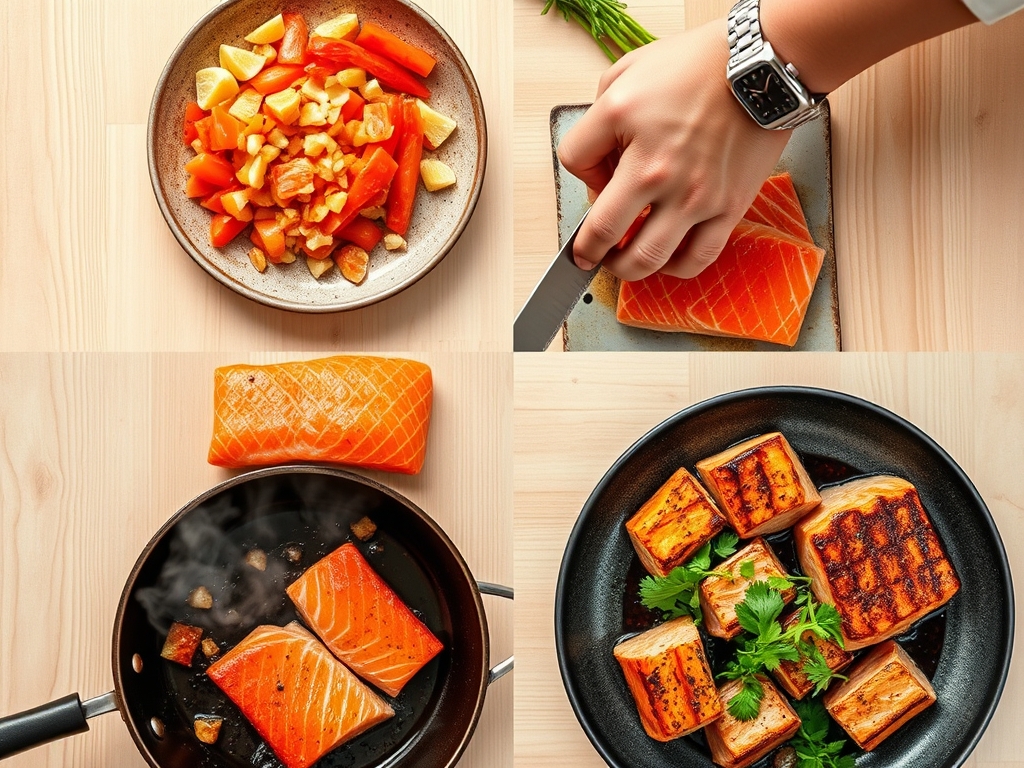
Pat the skin side of the salmon with paper towels until it is bone-dry. Moisture is the enemy of the Maillard reaction. If the surface is damp, the fish will steam rather than sear. Use a sharp knife to score the skin lightly, which prevents the fillet from curling as the collagen fibers contract.
Pro Tip: This process uses the science of evaporation. By removing surface water, you allow the heat to immediately begin breaking down amino acids and sugars, creating that golden-brown crust we crave.
2. The High-Heat Sear
Heat your heavy-bottomed skillet until the oil shimmers but does not smoke. Place the salmon skin-side down and press firmly with your fish spatula for 30 seconds. This ensures total contact between the skin and the heat source, leading to an even, glass-like crunch.
Pro Tip: This is known as protein denaturation. Pressing the fish prevents the "arch" that occurs when heat hits the connective tissue, ensuring the entire surface area undergoes uniform browning.
3. The Butter Baste (Arrosage)
Once the skin is crisp, flip the fish and drop a knob of cold butter, crushed garlic, and thyme into the pan. Use a large spoon to continuously pour the foaming butter over the salmon. This infuses the meat with aromatics while finishing the cooking process gently.
Pro Tip: Butter basting uses convection within the fat to cook the top and sides of the fish simultaneously. The milk solids in the butter toast, adding a nutty complexity to the flavor profile.
4. The Deglaze and Emulsify
Remove the fish and set it aside to rest. Pour off excess fat, then add a splash of white wine or verjus to the hot pan. Use a whisk to scrape up the fond (the brown bits stuck to the bottom). Swirl in a tablespoon of cold butter to create a silky pan sauce.
Pro Tip: This is the science of emulsification. The acid in the wine breaks down the fats, while the agitation of the whisk suspends the butter droplets in the liquid for a smooth finish.
5. The Acidic Brightening
Just before serving, use your microplane to shower the fillets with fresh lemon zest and a sprinkle of Maldon sea salt. The large salt crystals provide a structural "crunch" that contrasts with the soft, fatty interior of the King Salmon.
Pro Tip: Citric acid acts as a palate cleanser. It cuts through the heavy lipids of the King Salmon, "resetting" your taste buds so every bite feels as vibrant as the first.
The Deep Dive
Macro Nutrition: King Salmon is a nutritional powerhouse, offering approximately 20 grams of protein and 13 grams of healthy fats (Omega-3s) per 3.5-ounce serving. It is naturally low in sodium and high in Vitamin D and B12.
Dietary Swaps:
- Keto: This fish is a keto dream. Serve it over a bed of sautéed spinach with an extra dollop of herb compound butter.
- Vegan: While you cannot replicate salmon perfectly, a thick "steak" of King Oyster mushroom, scored and seared with seaweed-infused oil, mimics the texture and umami.
- GF: King Salmon is naturally gluten-free; just ensure your glazes use tamari instead of standard soy sauce.
The Fix-It:
- White Stuff Oozing Out: This is albumin, a protein that escapes when salmon is cooked too fast or too high. Fix: Lower your heat and pull the fish off the burner 5 degrees before your target temperature.
- Soggy Skin: This happens if you flip too early. Fix: Use a flexible spatula to peek; if it sticks, it is not ready. The skin will naturally release once the crust has formed.
- Dry Interior: You overshot the window. Fix: Immediately spoon a viscous sauce or olive oil over the fish to add moisture back to the palate.
Meal Prep & Reheating: To maintain "day-one" quality, never microwave salmon. This causes the fats to oxidize and turn "fishy." Instead, reheat it in a 275-degree oven covered with foil and a splash of water to create a gentle steam chamber.
The Wrap-Up
Mastering the best king salmon recipes is about embracing the chemistry of fat and heat. By using professional tools like the saucier and microplane, and respecting techniques like the Maillard reaction, you elevate a simple piece of seafood into a culinary event. King Salmon is forgiving because of its oil content, but it rewards precision with a texture that is truly unparalleled. Go forth, sear with confidence, and remember that the best ingredient you can bring to the kitchen is your own curiosity.
The Kitchen Table
How do I know when King Salmon is perfectly cooked?
Use a digital thermometer to check the thickest part. Aim for 125 degrees Fahrenheit for a perfect medium-rare. The fish should be opaque on the outside but still translucent and "glassy" in the very center.
Why is my salmon sticking to the pan?
The pan likely wasn't hot enough, or the fish was too wet. Ensure the oil is shimmering and the skin is bone-dry. Don't try to flip the fish until it naturally releases from the surface.
Can I cook King Salmon with the skin off?
You can, but you lose a layer of protection and flavor. The skin acts as an insulator, preventing the delicate flesh from overcooking. If you prefer no skin, remove it after cooking; it peels off easily.
What is the best way to season King Salmon?
Keep it simple. High-quality kosher salt and cracked black pepper are essential. Because the fish is so rich, save the complex flavors for a finishing sauce or a bright, acidic herb gremolata added just before serving.