
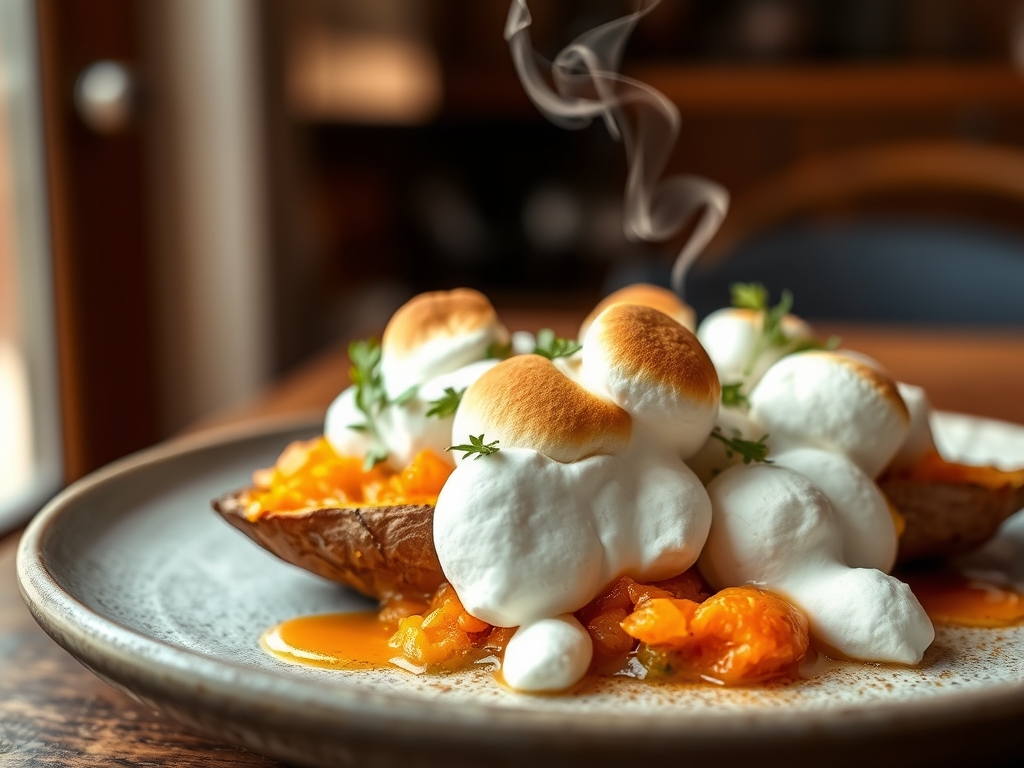
Picture the scent of caramelized sugars dancing through your kitchen as a heavy-bottomed skillet renders butter into a nutty, amber liquid. We are diving deep into the ultimate comfort food; specifically, eight ingenious sweet potato recipes with marshmallow topping that bridge the gap between rustic holiday sides and high-end patisserie. This is not just about dumping a bag of fluff onto a tuber. We are manipulating starch and sugar to create a culinary masterpiece that balances the earthy depth of Beta-carotene with the airy, gelatinous sweetness of a perfectly toasted marshmallow.
Whether you are aiming for a classic casserole or a modern deconstructed tart, the goal is a contrast in textures. We want the creamy, velvet-like mouthfeel of a pureed base juxtaposed against the crisp, charred exterior of a sugar-laden crown. It is a game of thermal management and flavor layering. By the time we are done, you will understand exactly why these sweet potato recipes with marshmallow topping are the undisputed champions of the dinner table. We are going to use professional techniques to ensure your marshmallows do not just melt into a puddle, but instead form a structural, golden-brown meringue that holds its shape.
The Gathers:
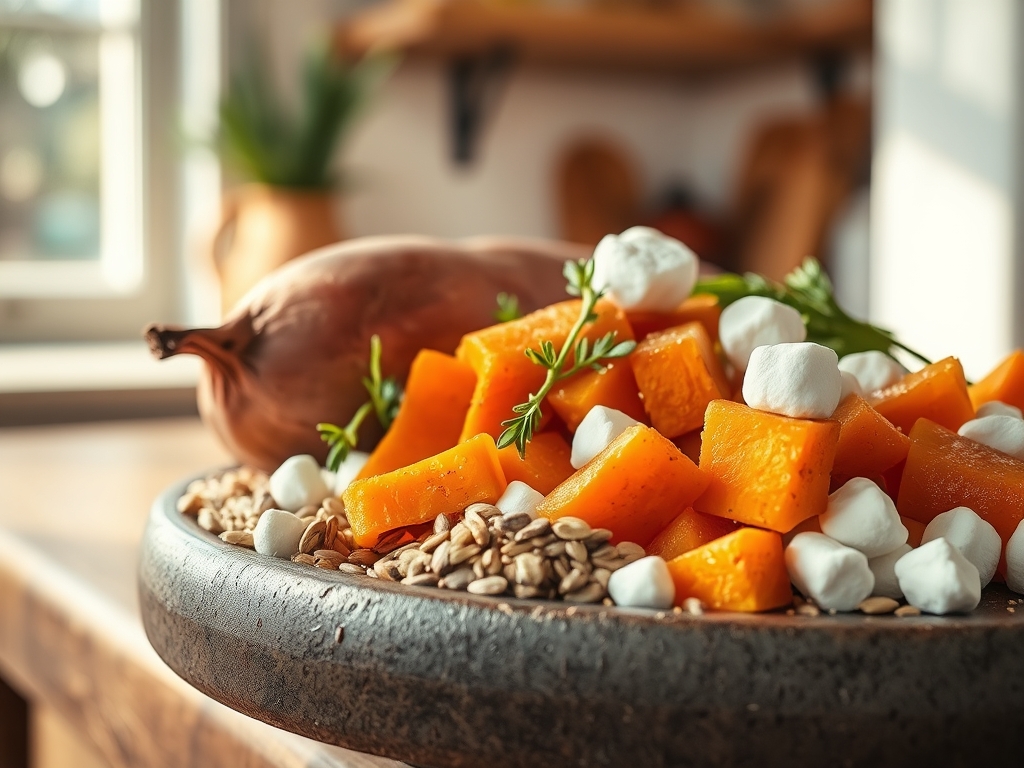
Before we ignite the burners, let us organize our mise-en-place. For the base, seek out Garnet or Jewel sweet potatoes; their high moisture content and sugar density make them ideal for a viscous puree. You will need high-fat European butter for better emulsification, heavy cream to aerate the mash, and a piquant hit of sea salt to balance the saccharine notes. For the topping, fresh marshmallows are non-negotiable; stale ones lose their elasticity and fail to puff.
Smart Substitutions: If you are looking to cut the richness, swap the heavy cream for full-fat coconut milk for a subtle tropical infusion. For a deeper flavor profile, replace white sugar with dark muscovado to introduce notes of molasses and toffee. If you find yourself without a potato masher, a sturdy saucier and a whisk can achieve a surprisingly smooth texture, though a food mill is the gold standard for removing fibrous strands. Always keep a microplane handy for grating fresh nutmeg; the volatile oils in fresh spice provide a much more vibrant aroma than the pre-ground variety.
The Clock:
Efficiency in the kitchen relies on "Chef's Flow," which is the art of overlapping tasks to minimize downtime. Expect a total active prep time of 25 minutes, with a roasting period of 45 to 60 minutes depending on the size of your tubers. The final "marshmallow torching" phase takes a mere 5 minutes.
To optimize your flow, scrub and pierce your potatoes first. While they roast and undergo enzymatic browning in the oven, use your bench scraper to clear your workstation and measure out your aromatics. By the time the potatoes reach an internal temperature of 210 degrees Fahrenheit, your butter should be browned and your cream brought to room temperature to prevent the mash from seizing.
The Masterclass:
1. The High-Heat Roast
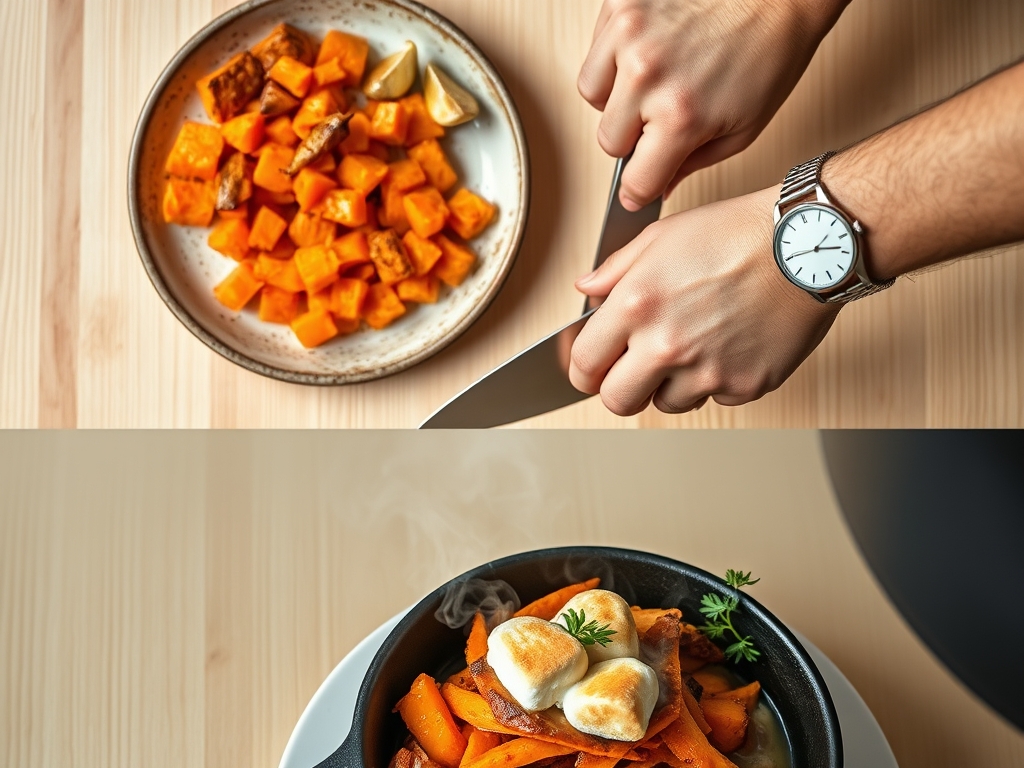
Place your whole sweet potatoes on a baking sheet lined with parchment. Roast at 400 degrees Fahrenheit until the skins are papery and the insides are soft.
Pro Tip: This high-heat environment triggers the Maillard reaction within the skin, concentrating the natural sugars and creating a complex, smoky base flavor that boiled potatoes simply lack.
2. The Clean Peel
Once the potatoes are cool enough to handle, use tongs to peel back the skins. They should slip off effortlessly, leaving the vibrant orange flesh intact.
Pro Tip: Utilize thermal carryover by letting the potatoes rest for five minutes; the steam trapped between the skin and the flesh loosens the bond, making peeling much cleaner.
3. The Precision Mash
Pass the warm flesh through a food mill or use a potato ricer into a large bowl. This ensures a uniform particle size for a silky mouthfeel.
Pro Tip: Avoid overworking the starch. Excessive agitation can lead to a gluey, viscous texture rather than a light, fluffy puree.
4. The Emulsion Phase
Slowly fold in your room-temperature butter and cream using a silicone spatula. Add your salt, cinnamon, and nutmeg at this stage.
Pro Tip: Incorporating fats at room temperature allows for a stable emulsification, preventing the butter from separating and creating an oily film on the palate.
5. The Aeration Fold
For a lighter "souffle" style hack, whisk two egg whites to soft peaks and gently fold them into the potato mixture before baking.
Pro Tip: The proteins in the egg whites provide structural integrity, allowing the mash to aerate and rise slightly in the oven for a cloud-like consistency.
6. The Marshmallow Architecture
Spread the mixture into a ceramic baking dish and top with a dense layer of marshmallows. Ensure they are packed tightly to prevent gaps.
Pro Tip: A crowded topping creates a collective heat shield, allowing the marshmallows to puff upward rather than melting into the potato base.
7. The Controlled Char
Place the dish under the broiler for 60 to 90 seconds, watching it like a hawk. Alternatively, use a kitchen torch for precision.
Pro Tip: This is a rapid dehydration of the sugar molecules. The "toast" is actually a form of controlled carbonization that adds a bitter counterpoint to the sweetness.
8. The Final Infusion
Finish with a sprinkle of flaky sea salt or a zest of orange using your microplane.
Pro Tip: The acidity in the citrus zest acts as a flavor brightener, cutting through the heavy lipids of the butter and cream.
The Deep Dive:
From a macro nutrition perspective, sweet potatoes are powerhouses of Vitamin A and fiber. However, once we introduce the marshmallow topping, we are firmly in "treat" territory. To make this vegan, use a high-quality vegan butter substitute and agar-based marshmallows. For a keto-friendly version, you would need to swap the sweet potatoes for roasted cauliflower and use sugar-free marshmallows; though the flavor profile will shift significantly.
The Fix-It:
- Runny Mash: If your puree is too wet, return it to a heavy-bottomed skillet over medium heat to cook off excess moisture.
- Burnt Topping: If the marshmallows ignite, do not use water. Carefully remove the charred layer with a bench scraper and start the topping again.
- Grainy Texture: This usually means the potatoes were undercooked. Next time, use a digital scale to ensure all potatoes are of similar weight for even cooking.
Meal Prep: To reheat and maintain "day-one" quality, use an air fryer at 300 degrees Fahrenheit. This dry heat re-crisps the marshmallow exterior without making the potato base soggy, which often happens in a microwave.
The Wrap-Up:
You are now armed with the scientific secrets to mastering sweet potato recipes with marshmallow topping. From the initial Maillard reaction during the roast to the delicate emulsification of the fats, every step serves a purpose. This is more than a side dish; it is a technical display of texture and temperature. Go forth, grab your tongs and your saucier, and create something that will have your guests begging for the recipe.
The Kitchen Table:
How do I stop marshmallows from disappearing?
The sugar in marshmallows dissolves if the potato base is too watery. Ensure you roast the potatoes to evaporate moisture and cook the base until thick before adding the topping. This creates a solid foundation for the marshmallows to sit on.
Can I make this recipe ahead of time?
Yes; prepare the sweet potato base up to two days in advance and store it in the refrigerator. However, do not add or toast the marshmallow topping until you are ready to serve to prevent them from becoming chewy or weeping.
What is the best way to brown the top?
A kitchen torch offers the most control for a "gourmet" look. If using a broiler, keep the oven door slightly ajar and rotate the dish every 20 seconds to ensure even caramelization and prevent localized burning.
Why is my sweet potato mash stringy?
Stringiness is caused by the internal fibers of the potato. To fix this, always pass your cooked potatoes through a food mill or ricer. This mechanical shearing removes the tough fibers, resulting in a professional, silky-smooth puree every time.