
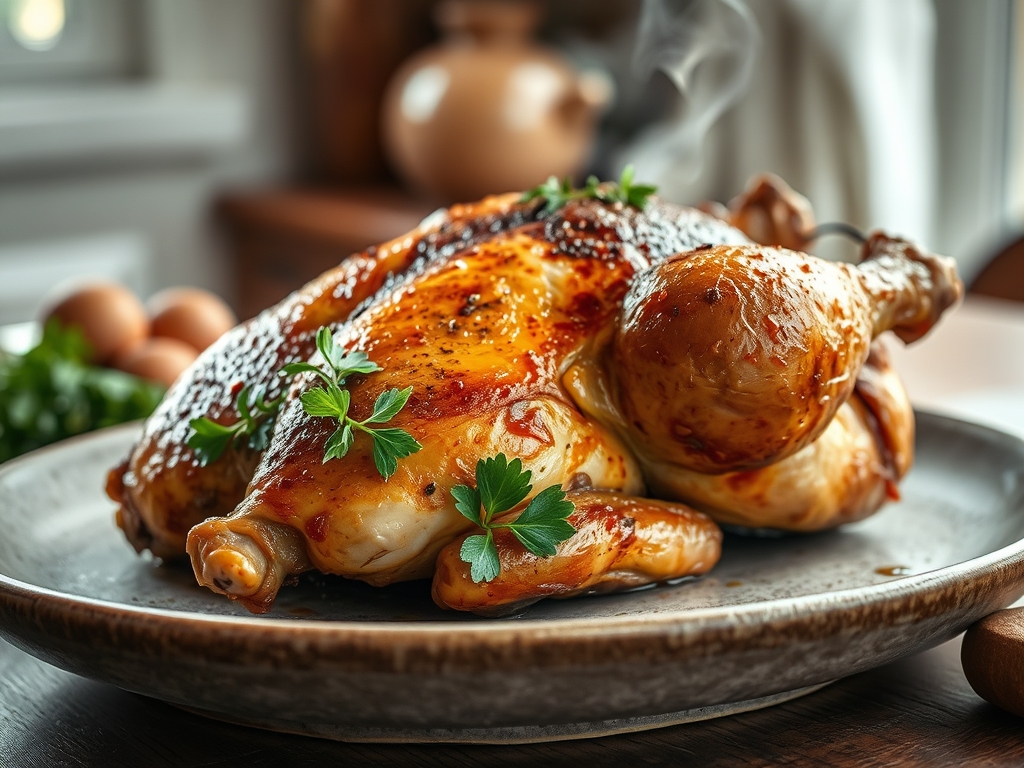
The moment you crack open the smoker lid and that surge of applewood-tinged steam hits your face, carrying ribbons of rendered fat and caramelized poultry skin, you know you've entered a different league of backyard cooking. Mastering whole chicken recipes smoker techniques transforms a humble bird into a mahogany-skinned, juice-dripping centerpiece that outperforms any rotisserie aisle option. This isn't about tossing a chicken on heat and hoping for the best. It's about understanding collagen breakdown, strategic brining windows, and smoke penetration science to deliver restaurant-caliber results every single time.
Smoking a whole chicken sits at the intersection of patience and precision. The low-and-slow method allows connective tissue to soften without squeezing out moisture, while the smoke itself deposits phenolic compounds that add complexity far beyond simple grilling. You're engineering a Maillard reaction on the exterior while keeping the breast meat in the 160-165°F sweet spot and thighs comfortably past 175°F. The result is a textural contrast: crisp, mahogany skin giving way to tender, pull-apart meat with a faint pink smoke ring just beneath the surface. Each bite should taste like controlled combustion, salt, and time.
These ten pro-level tips strip away guesswork. You'll learn how to truss for even heat distribution, when to apply rubs versus glazes, and why spatchcocking isn't always the answer for smoke absorption. Whether you're running a pellet smoker or a traditional offset, these strategies adapt to your rig and deliver consistent, competition-level birds.
The Gathers
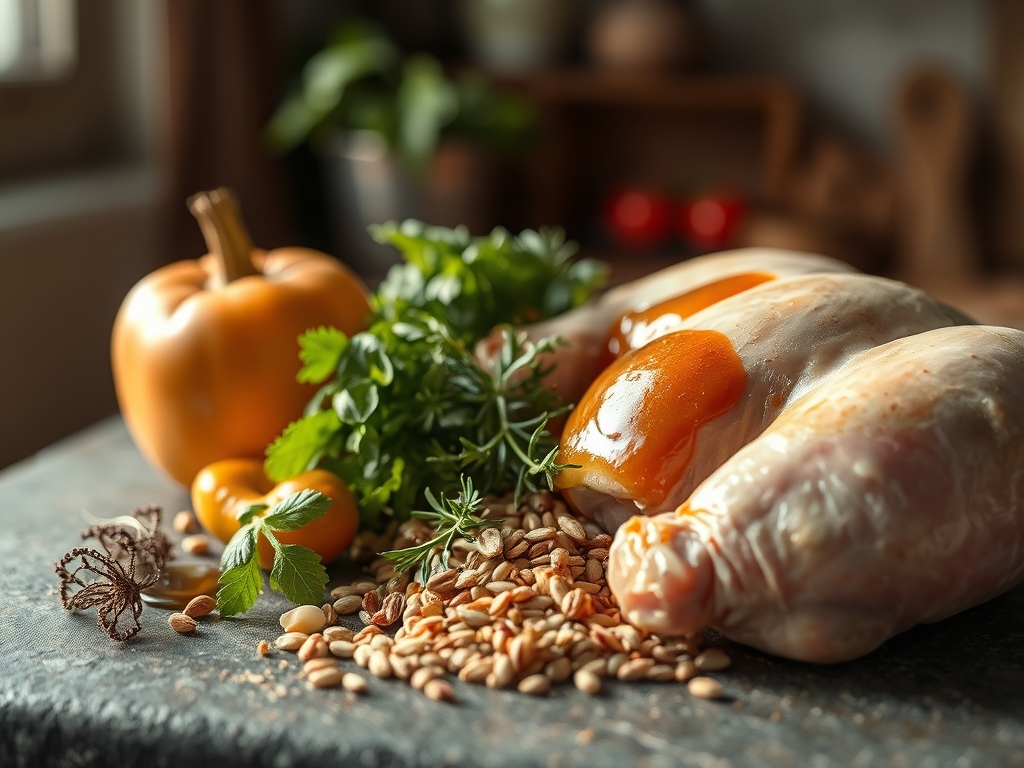
Start with a 4-5 lb whole chicken, preferably air-chilled rather than water-chilled, since excess surface moisture steals valuable smoking time and dilutes seasoning adhesion. As you see in the ingredient spread below, you'll need kosher salt (Diamond Crystal for volume, Morton's if measuring by weight), black pepper (coarse-cracked, not pre-ground dust), and smoked paprika for color insurance when your fire runs cooler than planned.
Yellow onion and garlic cloves go into the cavity, not for flavor transmission (a myth), but to moderate internal temperature swings and add aromatic steam. Neutral oil (grapeseed or avocado) binds the rub and promotes even browning. For the brine: brown sugar, bay leaves, and whole peppercorns. Optionally, apple cider vinegar in your spritz bottle keeps the surface tacky for continuous smoke adherence.
Smart Substitutions: Swap smoked paprika for ancho chili powder if you want earthy heat. Replace brown sugar with maple syrup in the brine for deeper caramelization. If you're out of kosher salt, use half the volume of fine sea salt to avoid over-salting.
The Clock
Prep Time: 25 minutes (includes trussing, oiling, and rub application).
Cook Time: 3-4 hours at 225-250°F, depending on bird size and ambient temperature.
Total Time: 4.5 hours (includes 1-hour brine minimum and 15-minute rest post-smoke).
Chef's Flow: Brine the night before. Pull the chicken from the fridge 30 minutes before smoking to temper, which prevents a cold core from stalling your cook. Prep your rub and preheat the smoker simultaneously. Use the final 15-minute rest to prepare sides or build a pan sauce from drippings, maximizing every minute.
The Masterclass
Step 1: Brine for Moisture Insurance
Submerge the chicken in a solution of 1/4 cup kosher salt, 1/4 cup brown sugar, and 4 cups cold water for 1-4 hours. Chef's Secret: Salt denatures muscle proteins, allowing them to retain moisture even past safe temps. Don't exceed 4 hours or the meat turns spongy. Rinse and pat bone-dry with paper towels.
Step 2: Truss Tight, Smoke Right
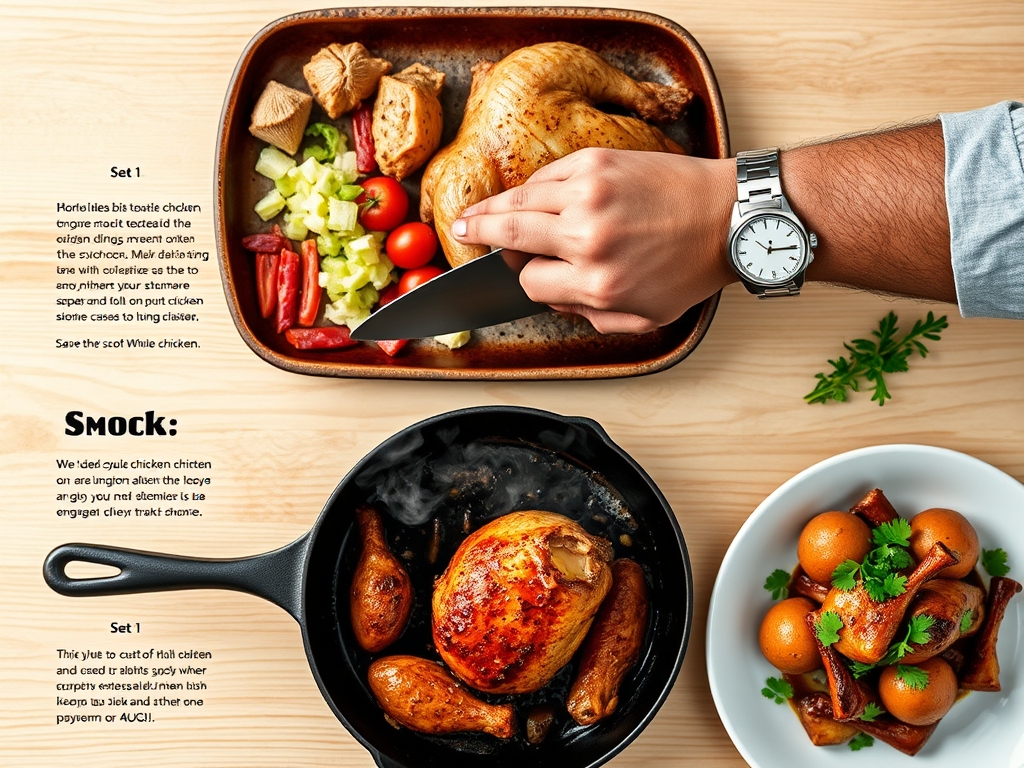
Use kitchen twine to bind the legs and tuck the wings under the body. Note the compact shape shown in the step-by-step photos. Why It Works: Uniform geometry means uniform heat exposure. Loose limbs overcook while the breast lags behind, destroying your texture gradient.
Step 3: Oil and Rub with Intention
Coat the bird with 2 tablespoons of oil, then apply a 2:1:1 ratio of kosher salt, black pepper, and smoked paprika. Press firmly so the rub adheres to every crevice. Chef's Secret: Oil creates a lipid barrier that slows moisture evaporation and promotes Maillard browning at lower temperatures.
Step 4: Smoke Low, Aim for Steady
Preheat your smoker to 225-250°F using fruitwood (apple, cherry) or a mild hardwood (oak, pecan). Place the chicken breast-side up on the grate. Why It Works: Fruitwoods produce clean, sweet smoke that complements poultry without overpowering. Avoid mesquite unless you want campfire-dominant flavors.
Step 5: Spritz Every Hour
After the first hour, mist the bird with a 50/50 mix of apple cider vinegar and water every 60 minutes. Chef's Secret: The acidic spritz keeps the surface tacky, allowing smoke particles to adhere continuously rather than sealing into a hard bark.
Step 6: Monitor Dual Zones
Insert a dual-probe thermometer: one in the thickest part of the breast (target 160°F), one in the thigh (target 175°F). Why It Works: Dark meat has more collagen and myoglobin, requiring higher temps for tenderness. Pulling both zones simultaneously is your mark of mastery.
Step 7: Rest Before Carving
Tent loosely with foil and rest 15 minutes. Chef's Secret: Thermal carryover will bring the breast to 165°F while muscle fibers relax, redistributing juices evenly. Cutting early floods your board, not your plate.
Nutritional Info
Per 4 oz serving (breast, skin-on):
Calories: 240
Protein: 28g
Fat: 13g (5g saturated)
Carbohydrates: <1g
Sodium: 320mg (varies by brine concentration)
Skin-on portions boost fat content but deliver the textural payoff. Removing skin post-cook drops fat to ~6g per serving.
Dietary Swaps
Keto: Already compliant. Skip any sugar-based glazes and use erythritol in the brine.
Paleo: Replace brown sugar with coconut sugar or omit entirely, relying on natural poultry sugars.
Low-Sodium: Cut brine salt by half and use a potassium chloride blend. Flavor loss is minimal if you compensate with herbs.
Serving & Presentation
Rustic Farmhouse: Carve tableside on a wooden board, pile skin-on pieces over charred lemon halves and fresh thyme sprigs.
Modern Minimalist: Slice breast into even medallions, fan over a white plate with a drizzle of pan jus reduced with shallots.
Family-Style Platter: Pull all meat, toss with smoked drippings, and serve in a cast-iron skillet with grilled vegetables for a communal presentation.
The Pro-Dodge
Pitfall 1: Rubbery Skin
Cause: Excess moisture or smoking below 225°F.
Fix: Pat dry obsessively and consider a 10-minute finishing blast at 375°F to render fat and crisp the skin.
Pitfall 2: Dry Breast Meat
Cause: Pulling the bird at 175°F internal across all zones.
Fix: Use dual probes and pull breast at 160°F. The thigh can handle 180°F without issue.
Pitfall 3: Bitter, Acrid Smoke Flavor
Cause: Using green wood or over-smoking past the 2-hour mark.
Fix: Use only seasoned hardwood. After 2 hours, smoke flavor peaks; additional time just dries the meat.
The Meal Prep Corner
Storage: Cool completely, then portion into airtight containers. Refrigerate up to 4 days or freeze up to 3 months.
Reheating: For day-one texture, reheat in a 300°F oven, loosely tented, until the internal temp hits 140°F. Avoid microwaving, which turns skin leathery and meat rubbery. Vacuum-seal and sous vide at 140°F for 30 minutes if you want steakhouse-level moisture retention.
The Wrap-Up
These ten strategies convert your smoker from a weekend experiment into a precision tool. You've learned the science behind brining, the geometry of trussing, and the thermal targets that separate amateur from pro. Now fire up that rig, trust your thermometer, and deliver a bird that makes people ask for seconds before they've finished their first serving. Drop your smoke wood preference and cook time results in the comments below. Let's build a smarter backyard cooking community, one perfectly smoked chicken at a time.
The Kitchen Table
Q: Can I skip the brine if I'm short on time?
A: Yes, but dry-brine instead. Coat the bird with salt 4-12 hours ahead and refrigerate uncovered. You'll get moisture retention and crispier skin from the drying effect.
Q: What's the best wood for chicken?
A: Apple or cherry for sweet, clean smoke. Pecan for nuttiness. Avoid mesquite and hickory unless you prefer assertive, campfire-forward flavors.
Q: Should I spatchcock or smoke whole?
A: Spatchcocking cooks faster (2 hours) and exposes more surface to smoke, but whole birds retain more moisture and present better for serving.
Q: How do I get crispy skin at low temps?
A: Pat obsessively dry, use oil to promote browning, and finish with a 10-minute sear at 375°F or under a broiler. Low-and-slow alone won't crisp.
Q: Can I use a gas or electric smoker?
A: Absolutely. Focus on consistent temps and thin blue smoke. Avoid thick white smoke, which deposits creosote and tastes bitter.