
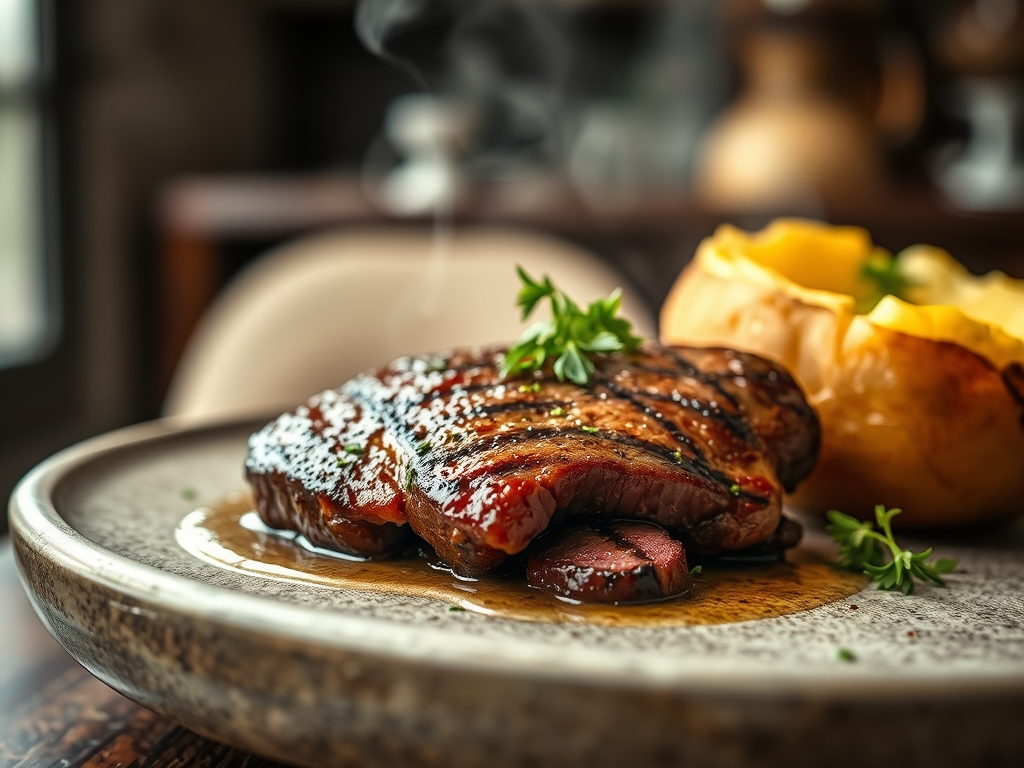
Imagine the scent of rendered beef tallow mingling with the earthy, mineral aroma of salt-crusted Russet skins. There is a primal comfort in the perfect sear, a culinary alchemy that transforms humble ingredients into a masterpiece. Mastering steak and baked potato recipes is not just about heat; it is about precision, timing, and the science of satisfaction.
The secret to a world-class dinner lies in the contrast between the crust of a well-aged ribeye and the cloud-like interior of a potato. Whether you are hosting a formal gala or a cozy Tuesday night, these ten variations on the classic pairing rely on the same chemical principles: the Maillard reaction and starch gelatinization. We are moving beyond basic salt and pepper to explore how acids, fats, and thermal control elevate a simple meal into a sensory experience that lingers long after the last bite. Let us unlock the secrets of the kitchen together.
The Gathers:
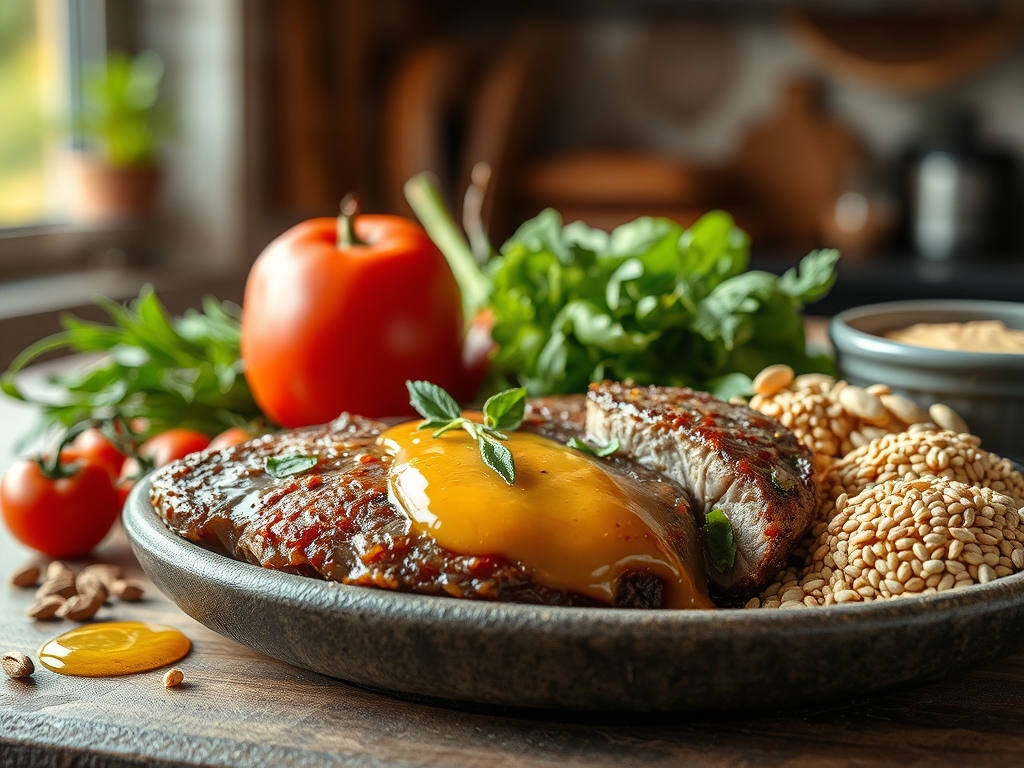
To execute these steak and baked potato recipes with professional finesse, your mise-en-place must be impeccable. Start with the protein. Look for heavy marbling; those intramuscular fat deposits provide the lipids necessary for a viscous, mouth-coating finish. Use a digital scale to ensure your steaks are uniform in weight, which guarantees consistent cooking times across the board. For the potatoes, high-starch Russets are non-negotiable because their low moisture content allows the internal cells to separate into that coveted fluffy texture.
Your pantry should include high-smoke-point oils like avocado or grapeseed to prevent acrid flavors during the sear. Keep a microplane nearby for zesting aromatics and a heavy-bottomed skillet (preferably cast iron) to act as a heat sink. For the "Smart Substitutions," if you are avoiding nightshades, swap the Russets for Japanese sweet potatoes; their high sugar content creates a beautiful caramelization. If beef is off the menu, a thick-cut cauliflower "steak" basted in umami-rich miso butter offers a similar structural integrity and savory profile.
The Clock:
Efficiency in the kitchen is all about the "Chef's Flow." Total active prep time for most steak and baked potato recipes is approximately 20 minutes, but the total duration spans about 75 minutes due to the slow dehydration of the potato skins. Start your potatoes first; they are the "long lead" item. While they undergo their thermal transformation in the oven, you have a 45-minute window to temper your meat, prepare compound butters, and organize your saucier for a pan sauce.
The final 15 minutes are high-intensity. This is when you execute the sear, perform the butter baste, and allow for the critical resting period. By the time your steak has finished its five-minute rest to allow the juices to redistribute, your potatoes will be at their peak fluffiness. This synchronized timing ensures that every component hits the table at the optimal serving temperature.
The Masterclass:
1. Tempering and Surface Preparation
Remove your steaks from the refrigerator 45 minutes before cooking and pat them bone-dry with paper towels. Use a bench scraper to clear your workspace of any moisture.
Pro Tip: This allows for thermal equilibrium. If a steak is too cold, the exterior will overcook before the center reaches the target temperature, leading to a gray, unappealing band of meat.
2. The High-Heat Sear
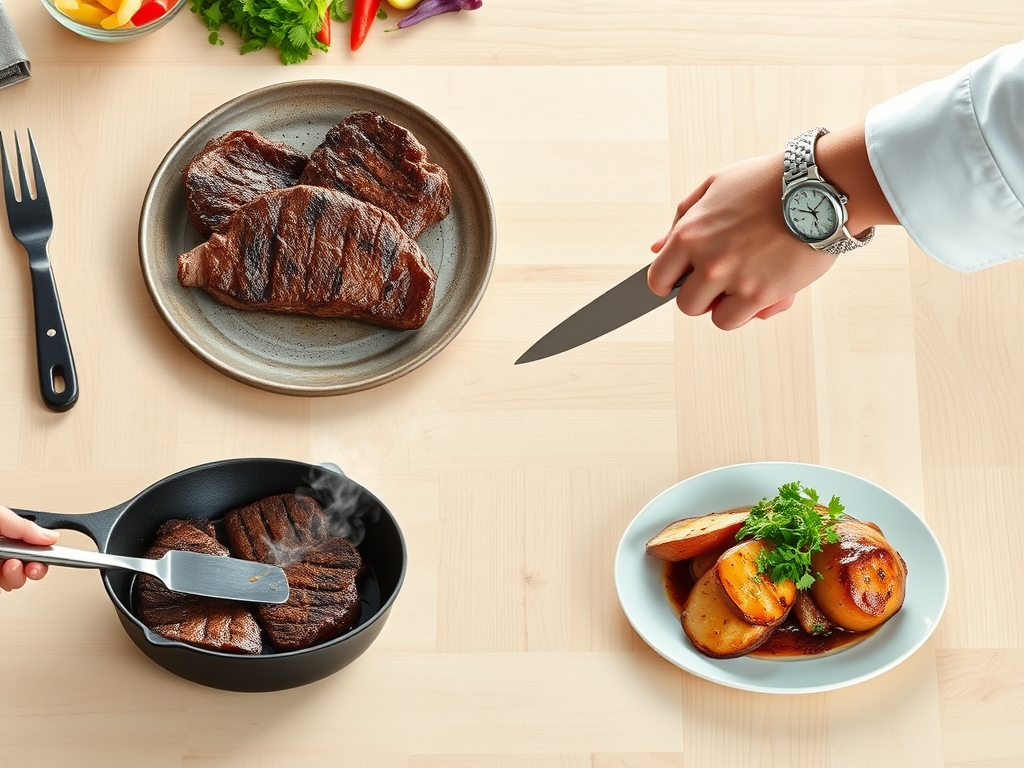
Heat your skillet until the oil just begins to shimmer and wisps of smoke appear. Place the steak away from you to avoid splashes and use tongs to press the meat firmly against the metal.
Pro Tip: This initiates the Maillard reaction, a chemical dance between amino acids and reducing sugars that creates hundreds of different flavor compounds and that iconic brown crust.
3. The Butter Baste (Arrosage)
During the final two minutes of cooking, add cold butter, crushed garlic, and thyme to the pan. Tilt the skillet and use a large spoon to continuously bathe the steak in the foaming fat.
Pro Tip: This technique, known as arrosage, uses the butter as a heat transfer medium to finish the cooking process while the milk solids brown, adding a nutty, complex depth.
4. The Potato Piercing and Salt Crust
Scrub your potatoes and pierce them several times with a fork before rubbing them with oil and coarse sea salt. Bake directly on the oven rack at 400 degrees Fahrenheit.
Pro Tip: Piercing allows steam to escape, preventing a pressure buildup that can make the potato gummy. The salt acts as a desiccant, drawing moisture from the skin to make it exceptionally crispy.
5. The Rest and Carryover Cook
Transfer the steak to a warm plate and let it sit undisturbed for at least five to ten minutes.
Pro Tip: This accounts for thermal carryover, where the internal temperature continues to rise by 5 degrees. Resting allows the muscle fibers to relax and reabsorb the moisture, ensuring a succulent bite.
The Deep Dive:
From a macro nutrition perspective, steak and baked potato recipes are a powerhouse of bioavailable protein, potassium, and B vitamins. A standard 6-ounce sirloin paired with a medium potato provides roughly 45 grams of protein and 35 grams of complex carbohydrates. For those on a Keto path, simply replace the potato with roasted radishes or a loaded cauliflower mash. Vegan enthusiasts can achieve a similar "meaty" satisfaction using thick portobello caps deglazed with balsamic vinegar and soy sauce.
"The Fix-It" guide for common pitfalls:
- The Gray Steak: If your meat looks boiled rather than seared, your pan wasn't hot enough or you crowded the skillet. Fix it by ensuring the pan is at least 425 degrees Fahrenheit and cooking in batches.
- The Gummy Potato: This happens when you wrap potatoes in foil, which traps steam. Fix it by baking them "naked" on the rack to allow for evaporation.
- Broken Pan Sauce: If your sauce separates, it lacks an emulsifier. Use a saucier to whisk in a cold pat of butter or a teaspoon of Dijon mustard over low heat to bind the fats and liquids.
For meal prep, reheating steak is a delicate science. Avoid the microwave, which vibrates water molecules and toughens the proteins. Instead, use a low-temperature oven (250 degrees) until the meat reaches 110 degrees, then flash-sear it in a pan for 30 seconds to revive the crust.
The Wrap-Up:
There is a reason steak and baked potato recipes remain the gold standard of the culinary world. It is a pairing that respects the integrity of the ingredients while rewarding the cook for their technical precision. By understanding the "why" behind the sear and the "how" behind the fluff, you transform a standard dinner into a gourmet event. So, grab your tongs, heat that skillet, and prepare to impress yourself with the sheer brilliance of chemistry on a plate.
The Kitchen Table:
How do I get the fluffiest baked potato?
Choose high-starch Russets and bake them at 400 degrees Fahrenheit directly on the oven rack. Avoid foil, as it traps steam and creates a boiled texture. Internal temperature should reach 205 degrees for maximum cell separation and fluffiness.
What is the best oil for searing steak?
Use oils with a high smoke point, such as avocado, grapeseed, or refined peanut oil. These fats can withstand the 400-plus degree temperatures required for the Maillard reaction without breaking down, oxidizing, or producing bitter, burnt flavors in your pan.
Can I make a steak and potato dinner in one pan?
Yes, by using a sheet pan or a large cast-iron skillet. Start the potatoes first since they require more time. Add the steak during the final minutes, ensuring the pan is hot enough to sear the meat without overcooking the vegetables.
Why is my steak tough even if it is medium-rare?
You likely skipped the resting phase or cut the meat with the grain. Always rest your steak for five to ten minutes to allow fibers to relax. Slice against the grain to shorten the muscle fibers, ensuring a tender mouthfeel.