
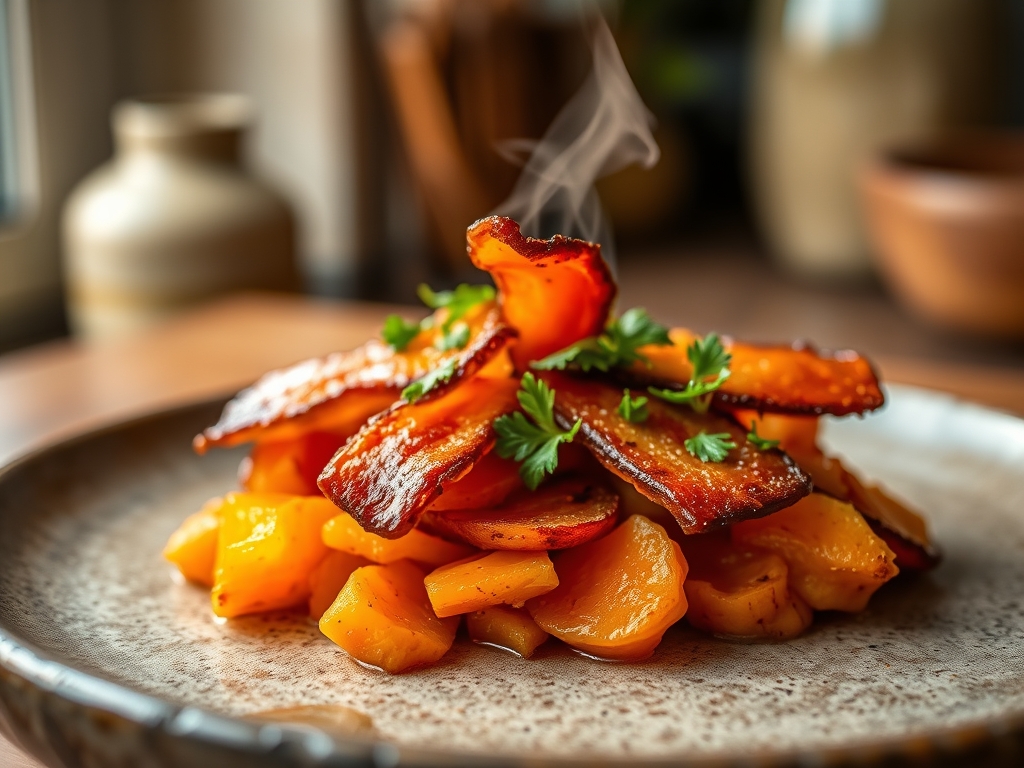
Picture the kitchen on a Saturday morning as the sun hits the counter. The air is heavy with the scent of woodsmoke and caramelized sugar. When we talk about bacon and sweet potato recipes, we are really talking about the ultimate chemical romance. It is a collision of salty, rendered lipids and dense, earthy starches that creates a flavor profile far more complex than the sum of its parts. You are not just making breakfast; you are orchestrating a symphony of Maillard reactions and sugar polymerization. This duo works because the high fat content of the bacon acts as a solvent for the fat-soluble vitamins in the sweet potato, making every bite both nutritionally dense and incredibly decadent. Whether you are crisping up a hash or stuffing a tuber with salty lardons, these hacks will transform your standard pantry staples into a five-star culinary experience. We are going beyond the basic bake to explore textures that range from velvet-smooth purées to shatteringly crisp edges.
The Gathers:
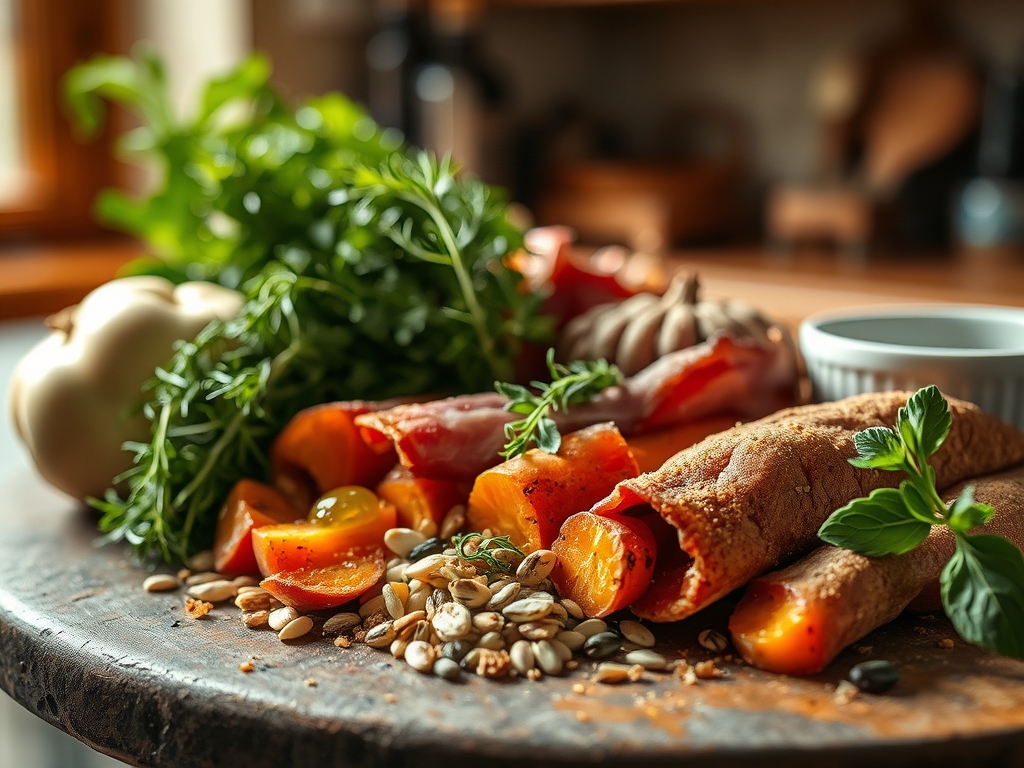
To master these bacon and sweet potato recipes, your mise-en-place must be precise. Start with heavy, copper-skinned Garnet or Jewel sweet potatoes; their high sugar content ensures a deep caramelization. For the bacon, seek out thick-cut, dry-cured slabs. Standard grocery store bacon is often injected with water, which creates steam in the pan and prevents that gorgeous, glass-like crunch we want.
You will need a sharp chef knife for uniform dicing, a heavy-bottomed skillet (cast iron is king here for heat retention), and a microplane for grating aromatics. Don't forget the supporting cast: fresh rosemary, smoked paprika to amplify the bacon's profile, and a high-smoke-point oil like avocado oil if you need to supplement the rendered fat.
Smart Substitutions:
If you are looking to lighten the load, turkey bacon can work, but you must add a teaspoon of ghee to provide the missing lipids for browning. For a vegan twist that mimics the profile, use king oyster mushrooms sliced thin and tossed in liquid smoke and maple syrup. If you find yourself out of sweet potatoes, butternut squash is your closest botanical cousin, though it has a more viscous, watery texture that requires a longer roast time to concentrate the sugars.
The Clock
Efficiency in the kitchen is all about "Chef's Flow." This is the art of overlapping tasks so that no heat is wasted. For these bacon and sweet potato recipes, your total active prep time is roughly 20 minutes, with a total cook time of 45 minutes.
The flow begins with the bacon. Always start your bacon in a cold skillet. This allows the fat to render out slowly before the proteins seize, ensuring the meat doesn't curl or burn. While that fat is liquefying, you are at the cutting board. By the time your potatoes are diced, your skillet is primed with a shallow pool of liquid gold. The "dead time" while the potatoes roast or sauté is when you prepare your garnishes or whip up a piquant dipping sauce. Remember, sweet potatoes have a high thermal mass; they hold heat for a long time, so you have a generous ten-minute window for plating before the temperature drops significantly.
The Masterclass
1. The Cold-Start Render
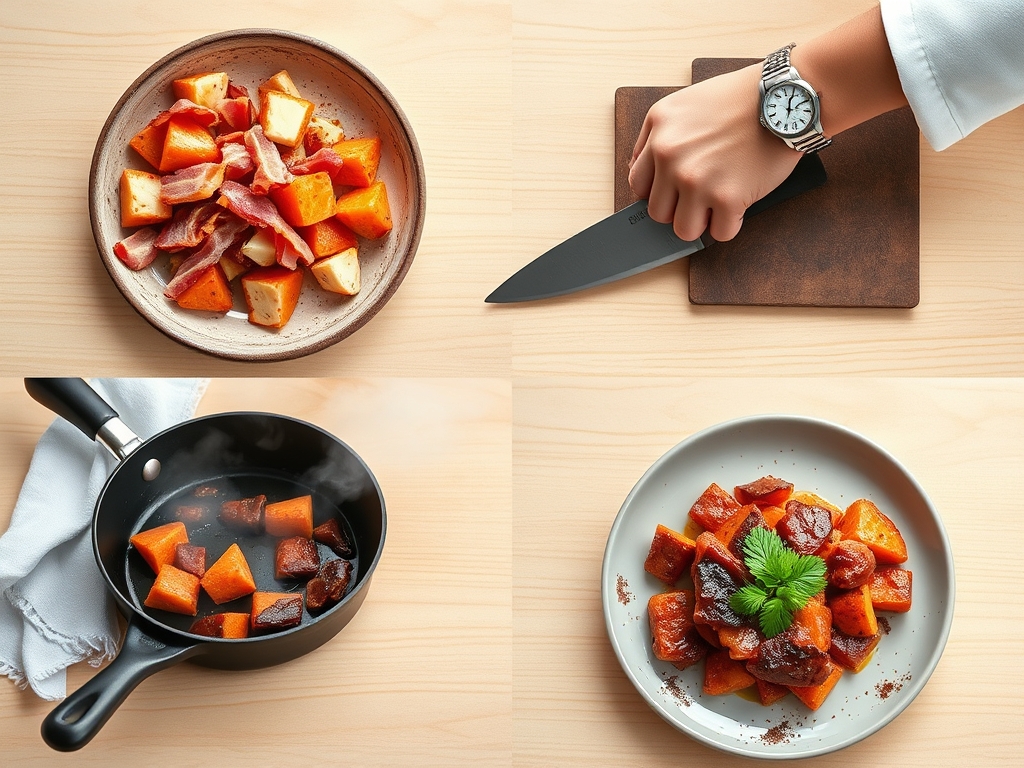
Place your chopped bacon in a cold heavy-bottomed skillet over medium-low heat. Use tongs to spread the pieces evenly. This slow rise in temperature allows the intramuscular fat to melt away, leaving the muscle fibers to crisp up in their own oil.
Pro Tip: This technique prevents the denaturation of proteins from happening too quickly. If you drop bacon into a screaming hot pan, the exterior chars while the fat remains rubbery and unrendered.
2. The Starch Par-Cook
While the bacon renders, pierce your sweet potatoes and microwave them for three minutes, or par-boil the cubes in salted water for five minutes. Drain them thoroughly and let them air-dry on a wire rack.
Pro Tip: Par-cooking initiates gelatinization. By partially breaking down the starch granules before they hit the fat, you ensure a fluffy interior and a crust that forms a structural bond with the bacon fat.
3. The Fond Deglaze
Once the bacon is crispy, remove it with a slotted spoon but leave the fat. Crank the heat to medium-high and toss in your sweet potatoes. As they brown, they will pick up the "fond" (the brown bits) left by the bacon. If the pan looks dry, use a splash of apple cider vinegar to deglaze.
Pro Tip: Deglazing uses solvent extraction to pull concentrated flavor compounds off the bottom of the pan and incorporate them directly into the surface of the potatoes.
4. The Aromatics Infusion
When the potatoes are three-quarters done, add your minced garlic, shallots, and herbs. Use a bench scraper to keep the ingredients moving so the garlic doesn't burn.
Pro Tip: Adding aromatics at the end prevents pyrolysis, the chemical decomposition of organic matter caused by overexposure to high heat, which turns garlic bitter.
5. The Sweet-Salty Glaze
Drizzle a tablespoon of maple syrup or honey over the mixture in the final two minutes. The sugars will fuse with the salt from the bacon to create a sticky, lacquered coating.
Pro Tip: This is the Maillard reaction on overdrive. The amino acids in the bacon and the sugars in the syrup create hundreds of new flavor compounds in seconds.
6. The Final Aeration
Before serving, toss the mixture vigorously. This incorporates air and ensures the fat is evenly distributed rather than pooling at the bottom of the bowl.
Pro Tip: Aeration lightens the mouthfeel of the dish. It prevents the palate from becoming "fat-fatigued," allowing the piquant notes of the herbs to shine through.
The Deep Dive
Let's talk numbers. A standard serving of these bacon and sweet potato recipes provides a powerhouse of Vitamin A, potassium, and complex carbohydrates. While bacon brings the saturated fat, it also provides essential B vitamins and selenium.
Dietary Swaps:
For my Keto friends, swap the sweet potato for cauliflower florets; they won't have the same sweetness, but they absorb bacon fat like a sponge. For a Gluten-Free guarantee, always check your bacon label, as some cheap cures use malt (barley) as a sweetener.
The Fix-It:
- Soggy Potatoes: This happens if you crowd the pan. The moisture escaping the potatoes turns into steam. Fix: Cook in batches or use a larger sheet pan.
- Burnt Bacon Bits: If your bacon turns to ash before the potatoes are soft, you didn't remove the bacon during the potato sear. Fix: Always remove the solids and return them at the very end.
- Bland Profile: Sweet potatoes need acid. Fix: A squeeze of lime or a dash of hot sauce will cut through the richness and "wake up" the flavors.
Meal Prep Science:
To reheat and maintain "day-one" quality, avoid the microwave. The microwave vibrates water molecules, making the bacon rubbery. Instead, use an air fryer or a toaster oven at 350 degrees. This re-crisps the exterior lipids through convection, restoring the structural integrity of the starch.
The Wrap-Up
There you have it; the definitive guide to making bacon and sweet potato recipes that actually impress. By understanding the physics of heat and the chemistry of fat, you have moved beyond being a recipe-follower to being a kitchen scientist. These hacks aren't just about food; they are about mastering the textures and aromas that make a meal memorable. Grab your skillet, find the best bacon in town, and go create something legendary. Your kitchen is waiting for that smoky, sweet magic to happen.
The Kitchen Table
Can I make these bacon and sweet potato recipes ahead of time?
Yes, you can par-roast the potatoes and fry the bacon a day early. Store them separately in airtight containers. Combine and finish them in a hot skillet for five minutes before serving to ensure the bacon stays crispy and the potatoes stay firm.
What is the best type of bacon for roasting with potatoes?
Thick-cut, applewood-smoked bacon is ideal. The thicker slices hold their shape during the long roasting process, providing a chewy contrast to the soft potatoes. Avoid thin-sliced bacon, as it will likely disintegrate or burn before the potatoes are fully cooked.
How do I prevent the sweet potatoes from sticking to the pan?
Ensure your skillet is properly seasoned or use a high-quality non-stick pan. Most importantly, do not flip the potatoes too early. Wait for the sugars to caramelize and form a crust; once this happens, the potato will naturally "release" from the surface.
Is it necessary to peel the sweet potatoes?
Peeling is optional. The skins contain extra fiber and nutrients, and they crisp up beautifully in bacon fat. If you choose to keep the skins, just ensure you scrub the tubers thoroughly with a vegetable brush to remove any residual grit or dirt.